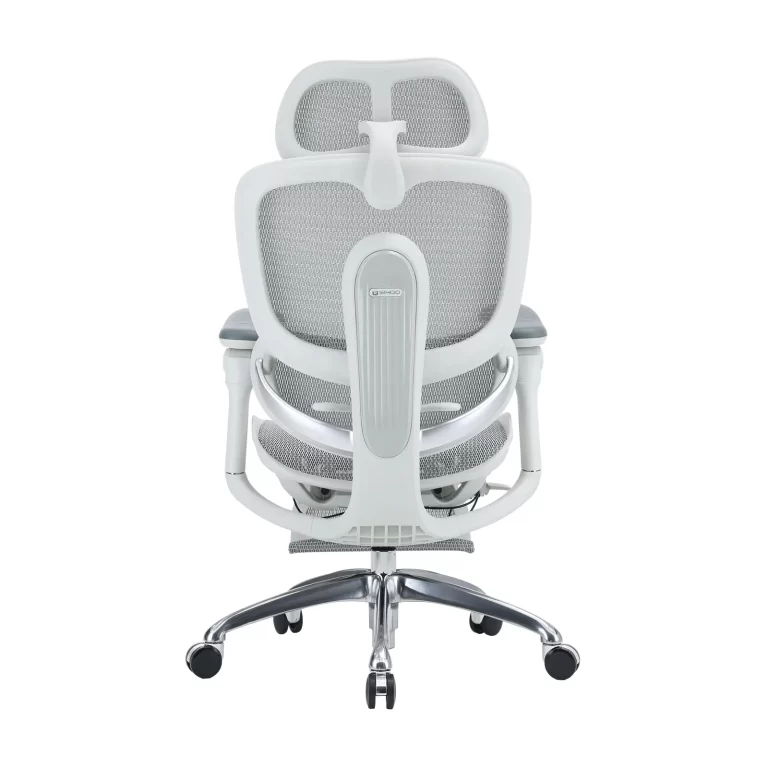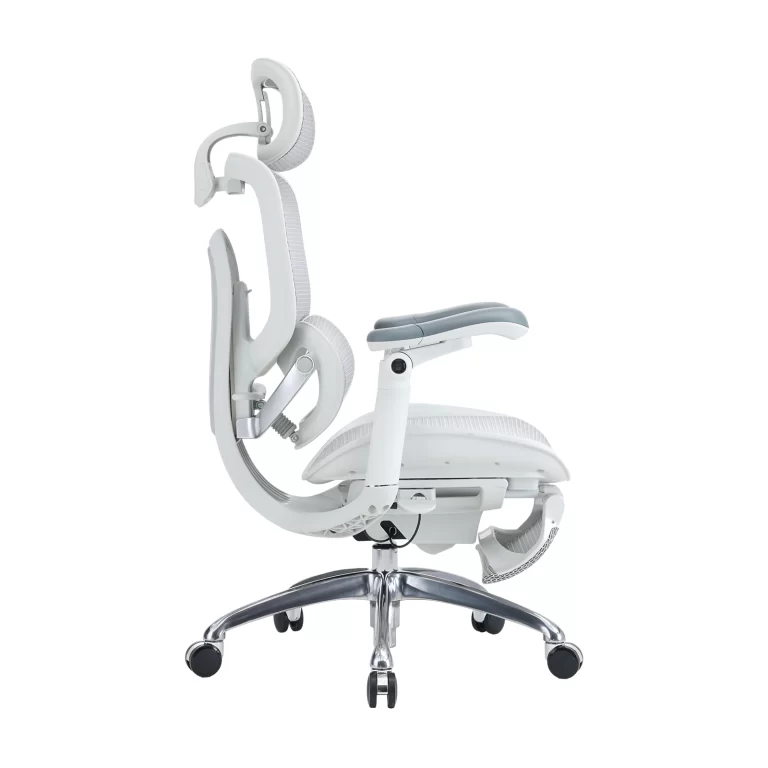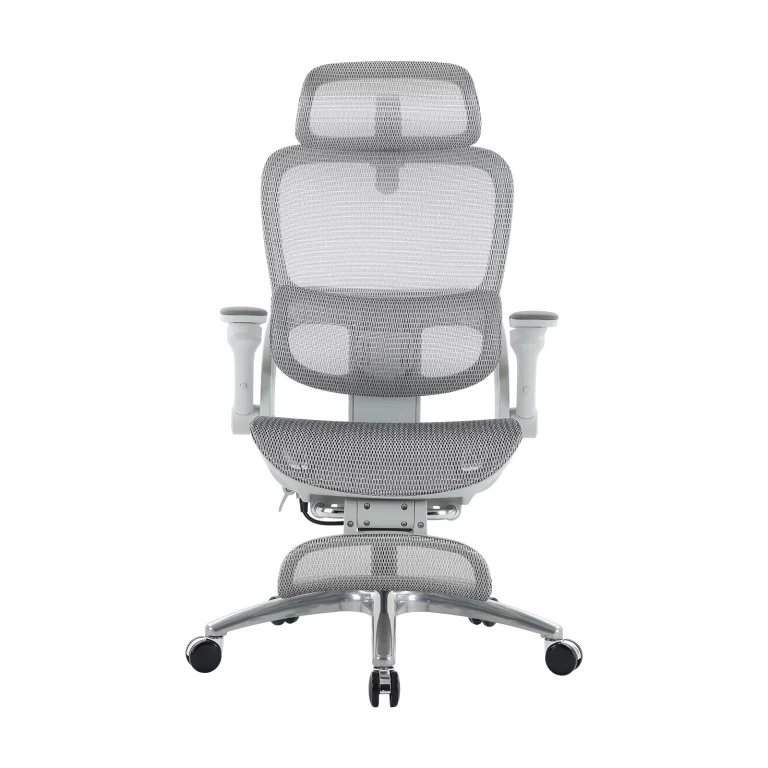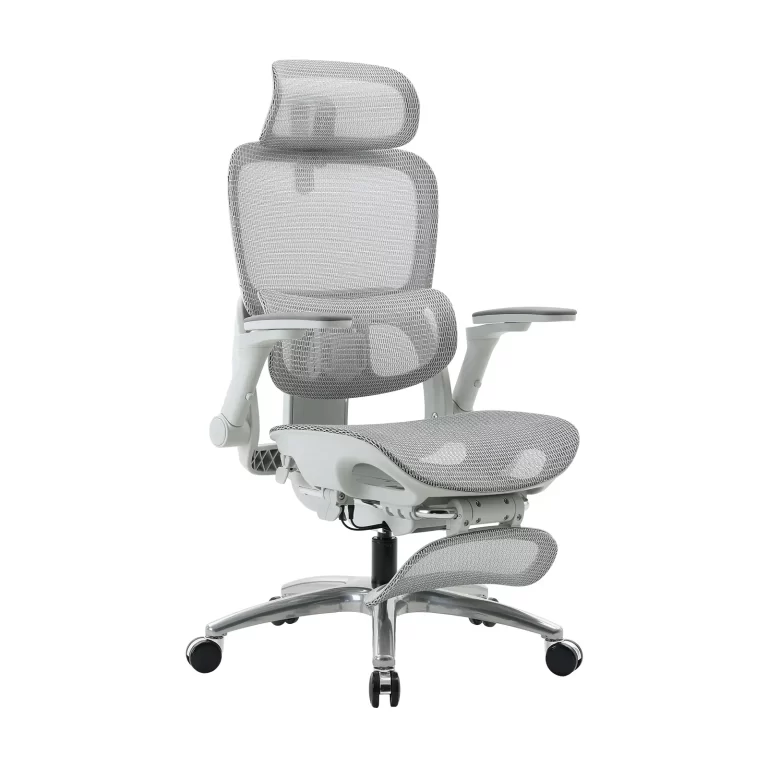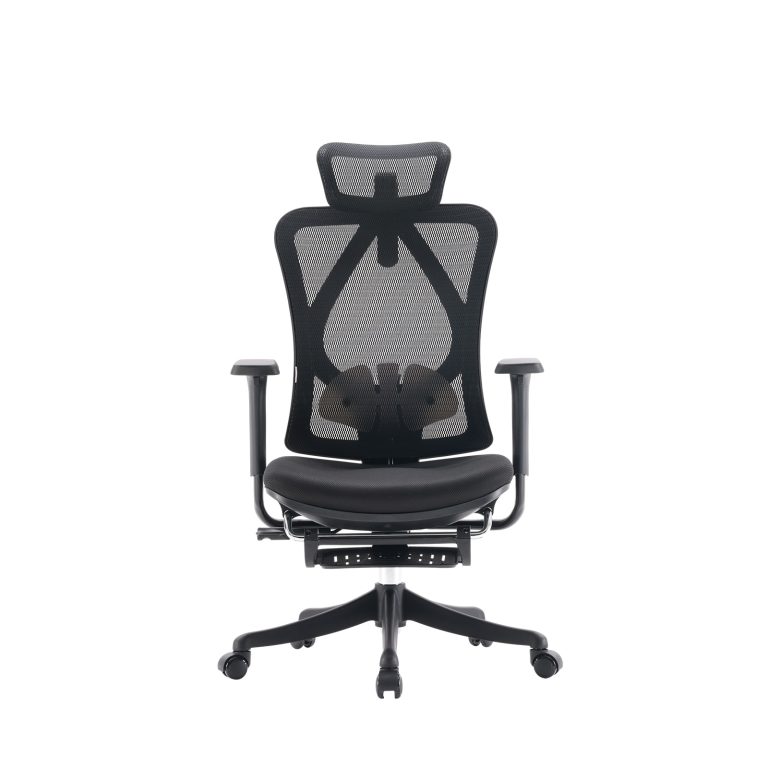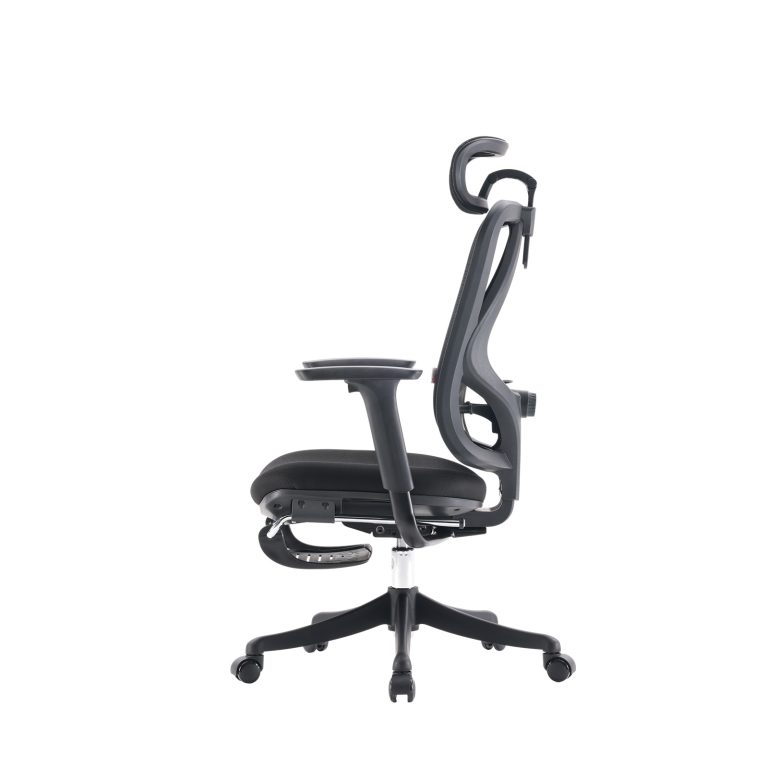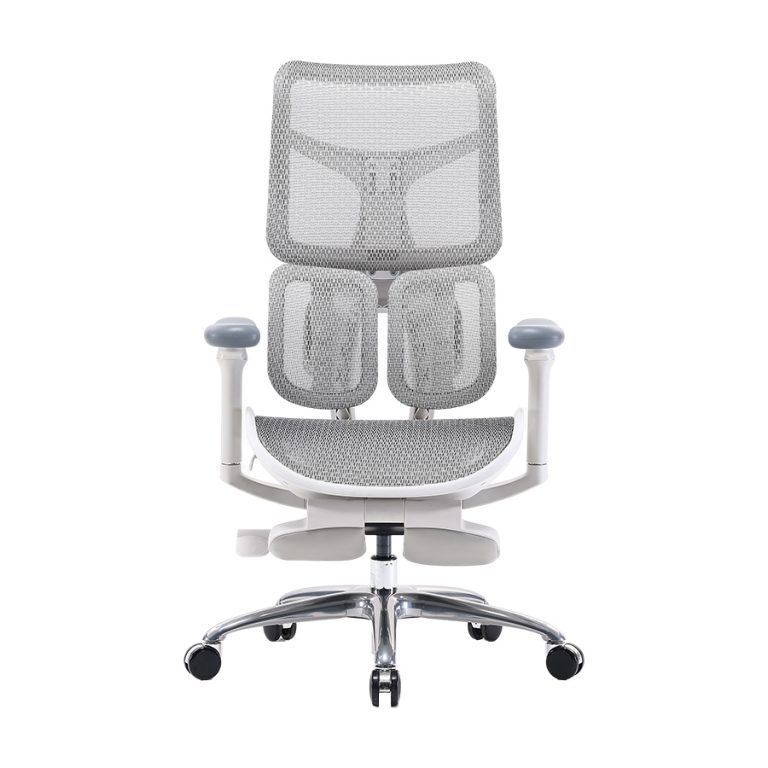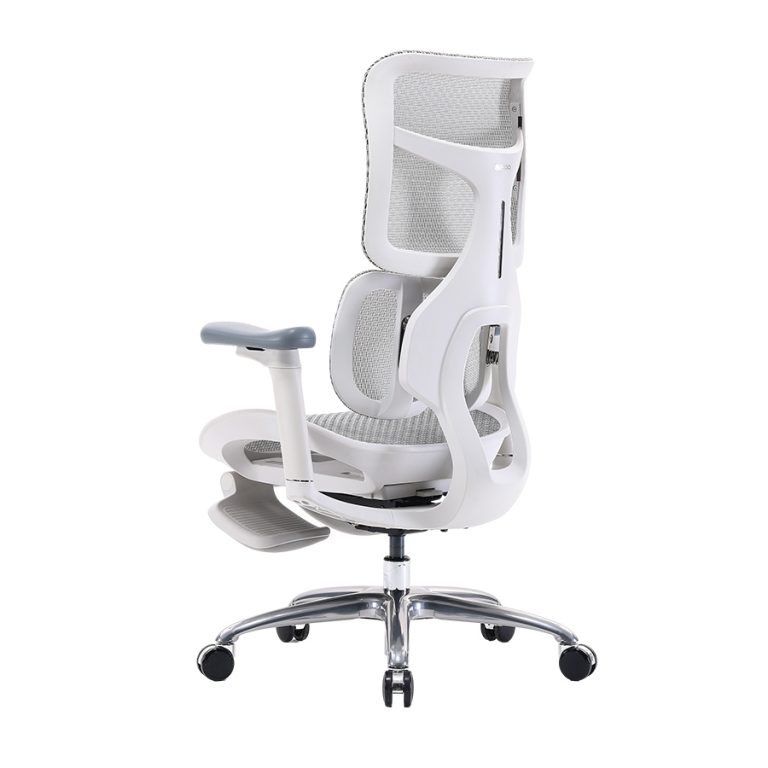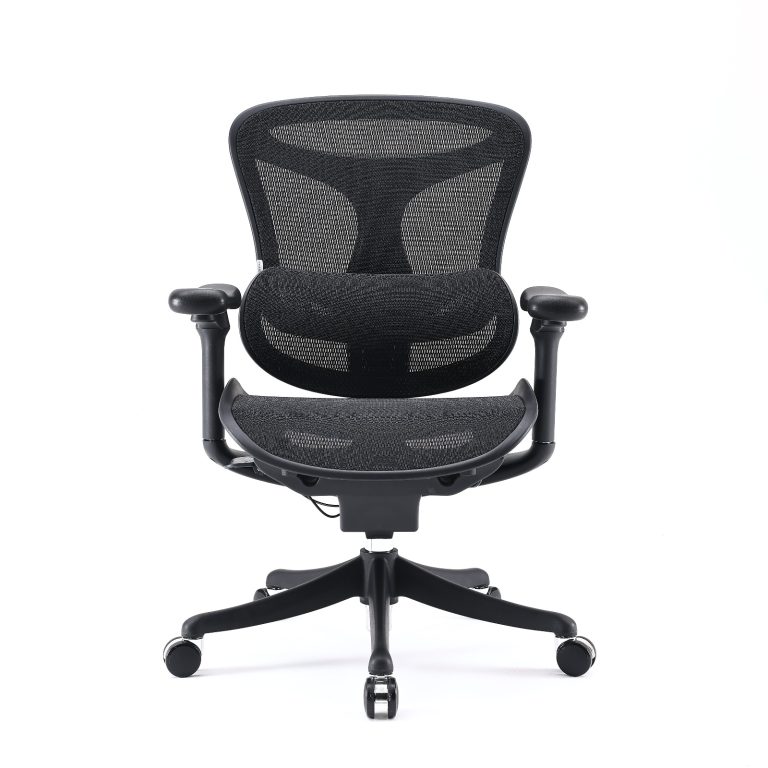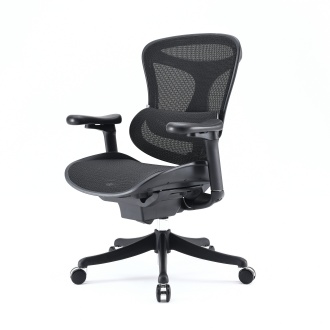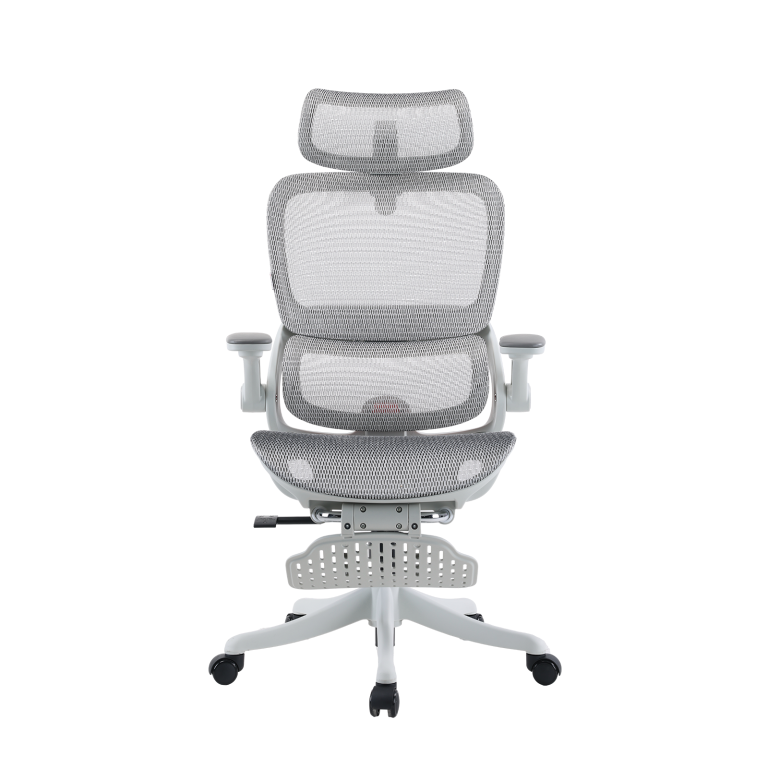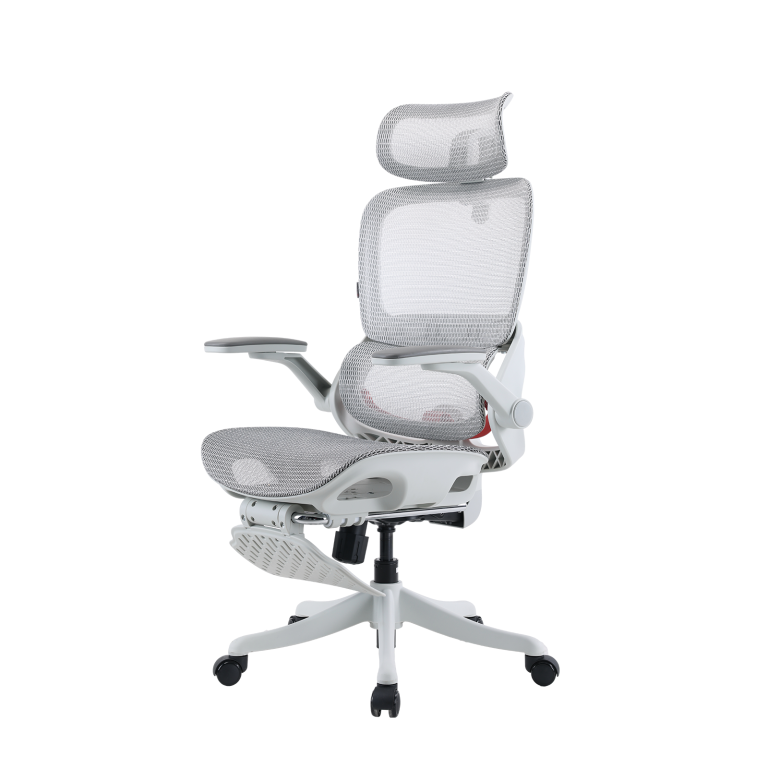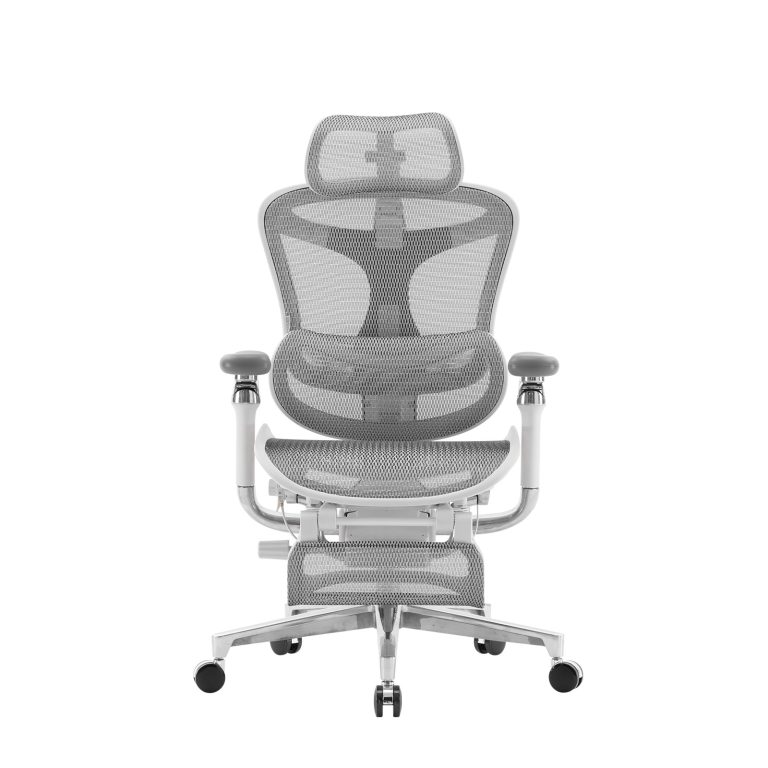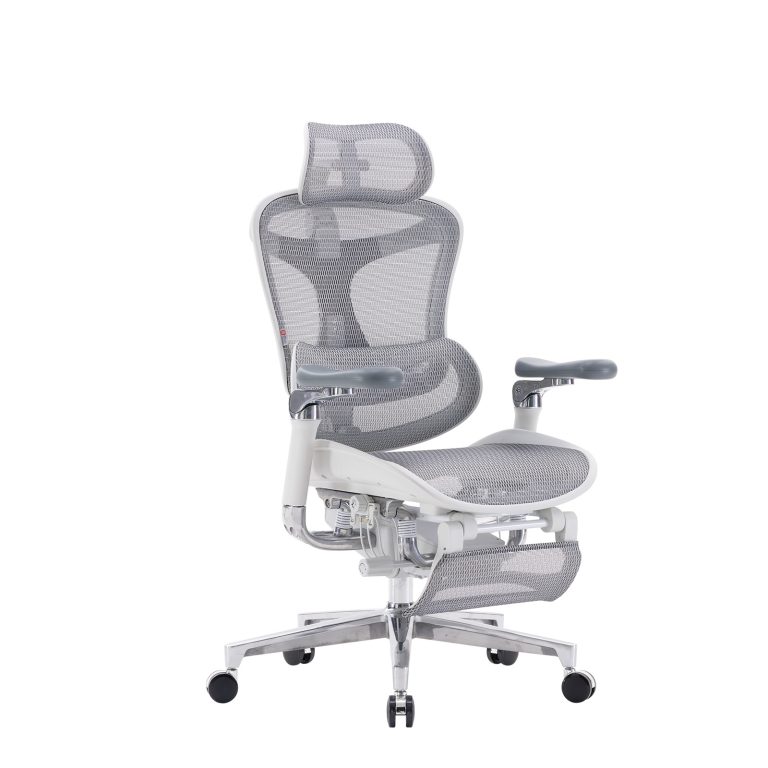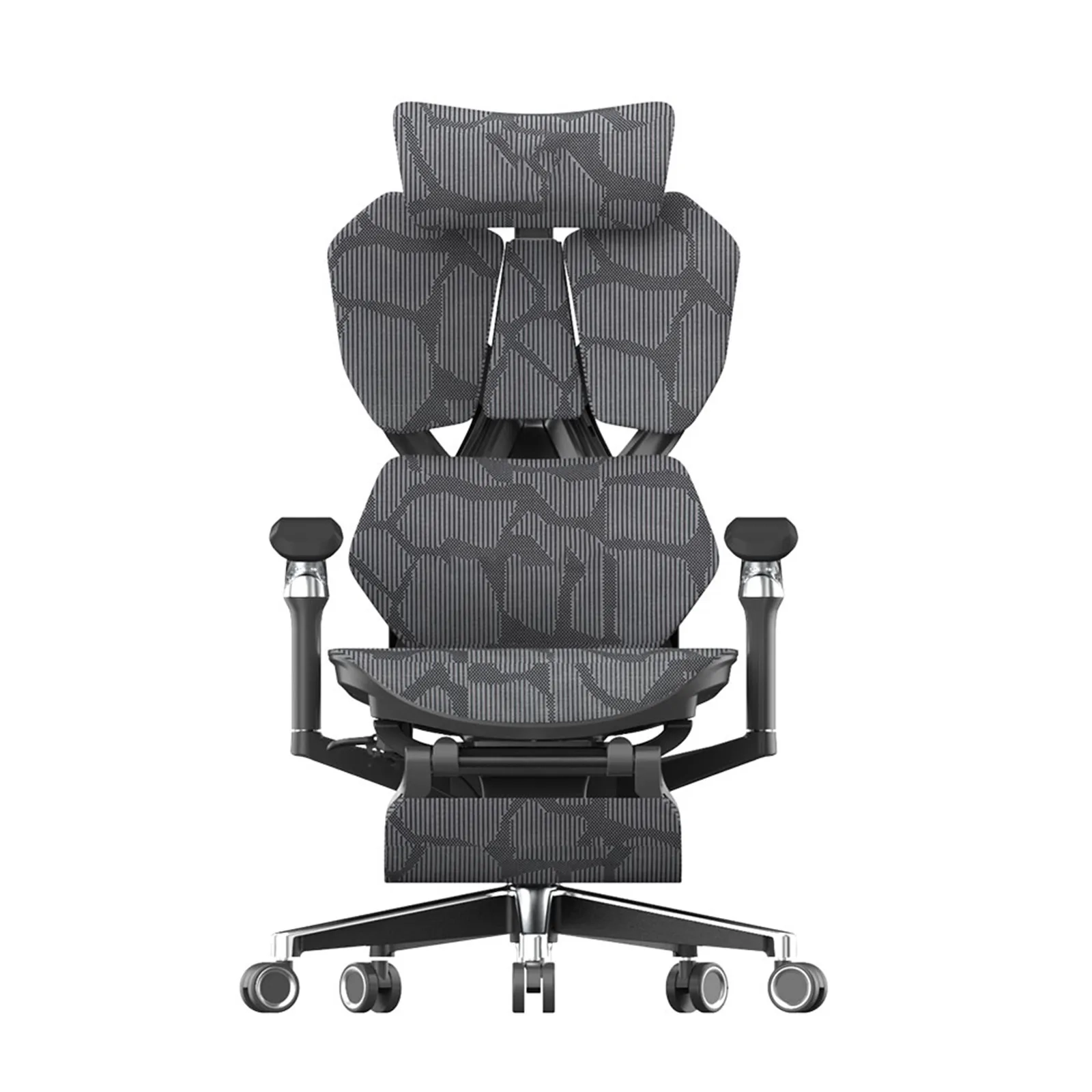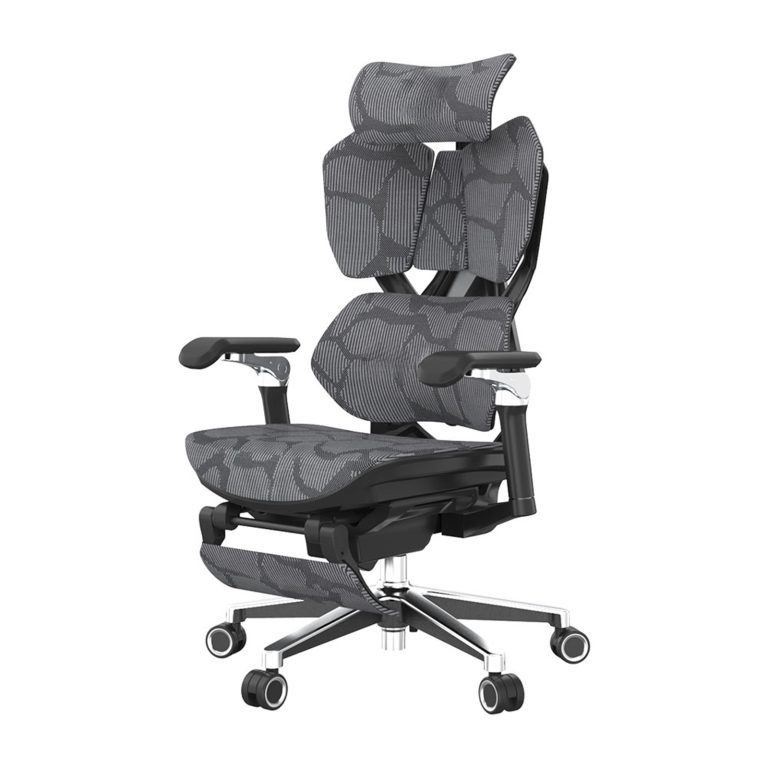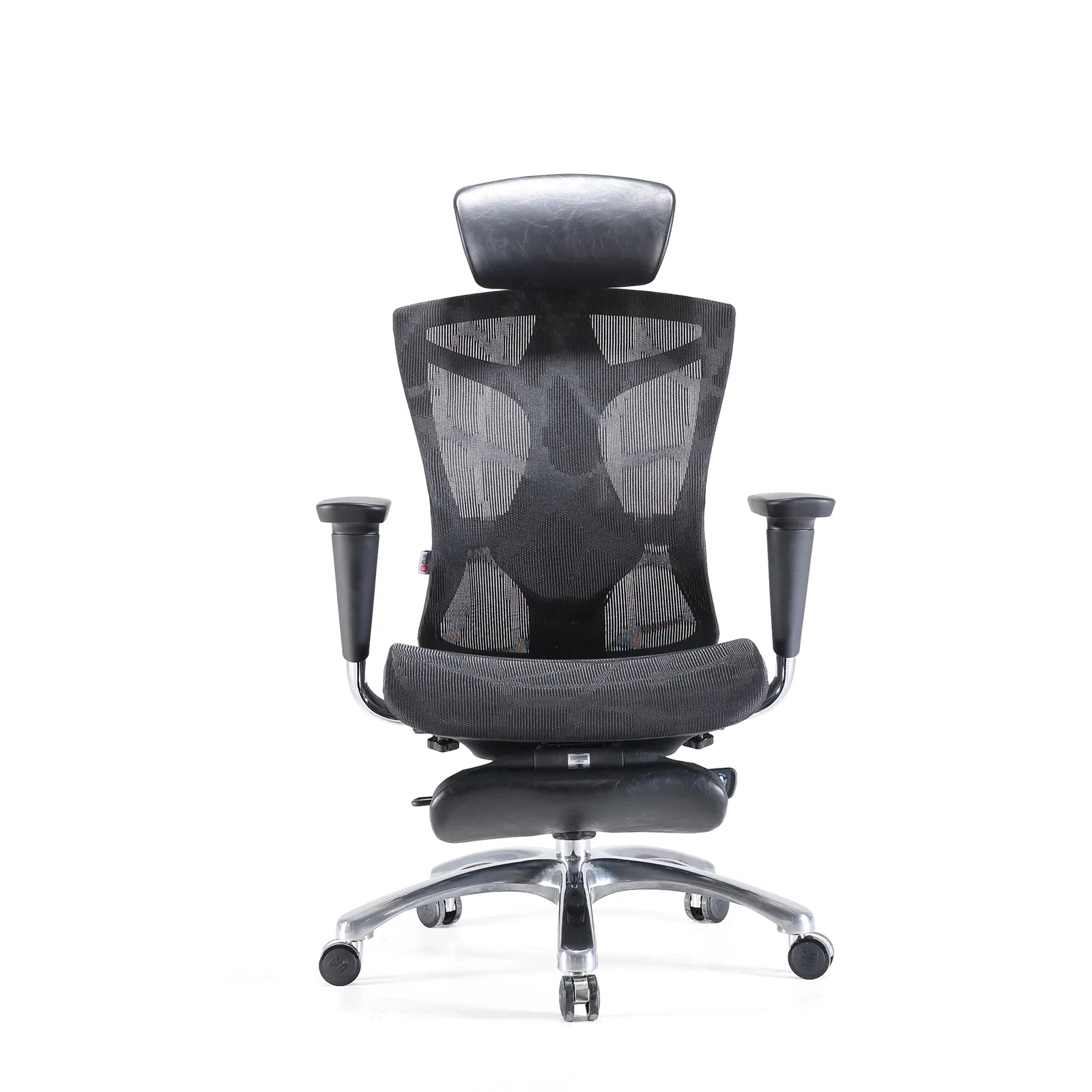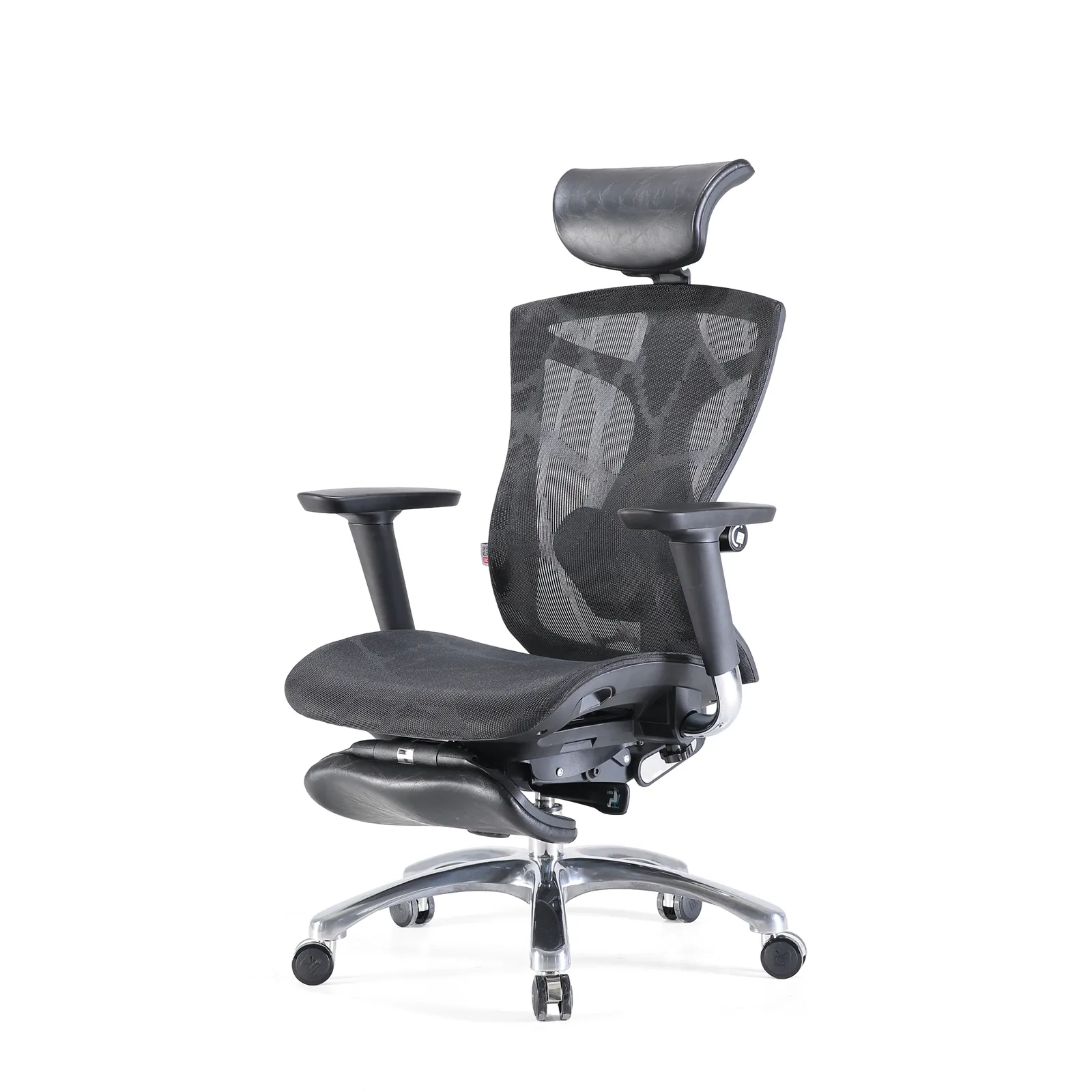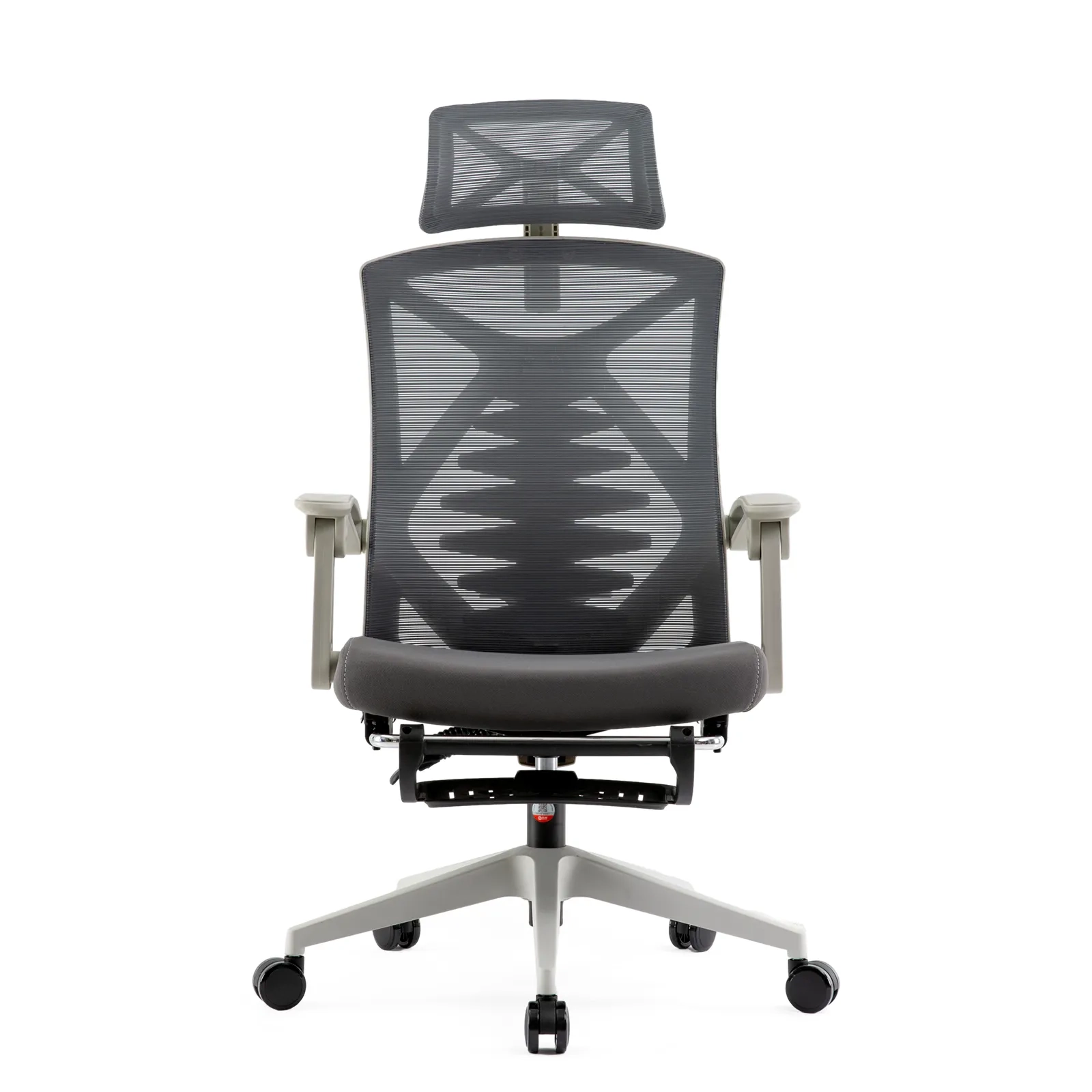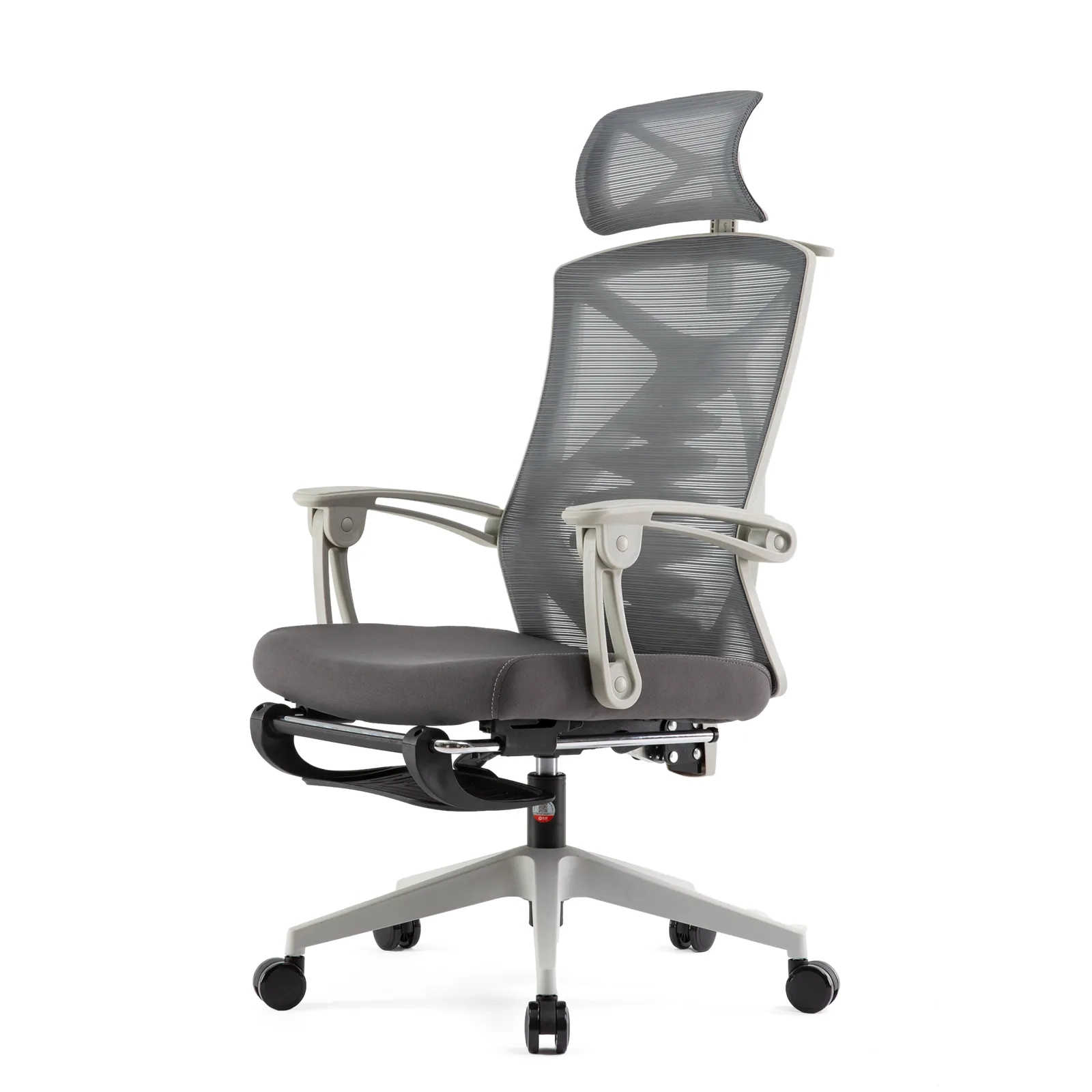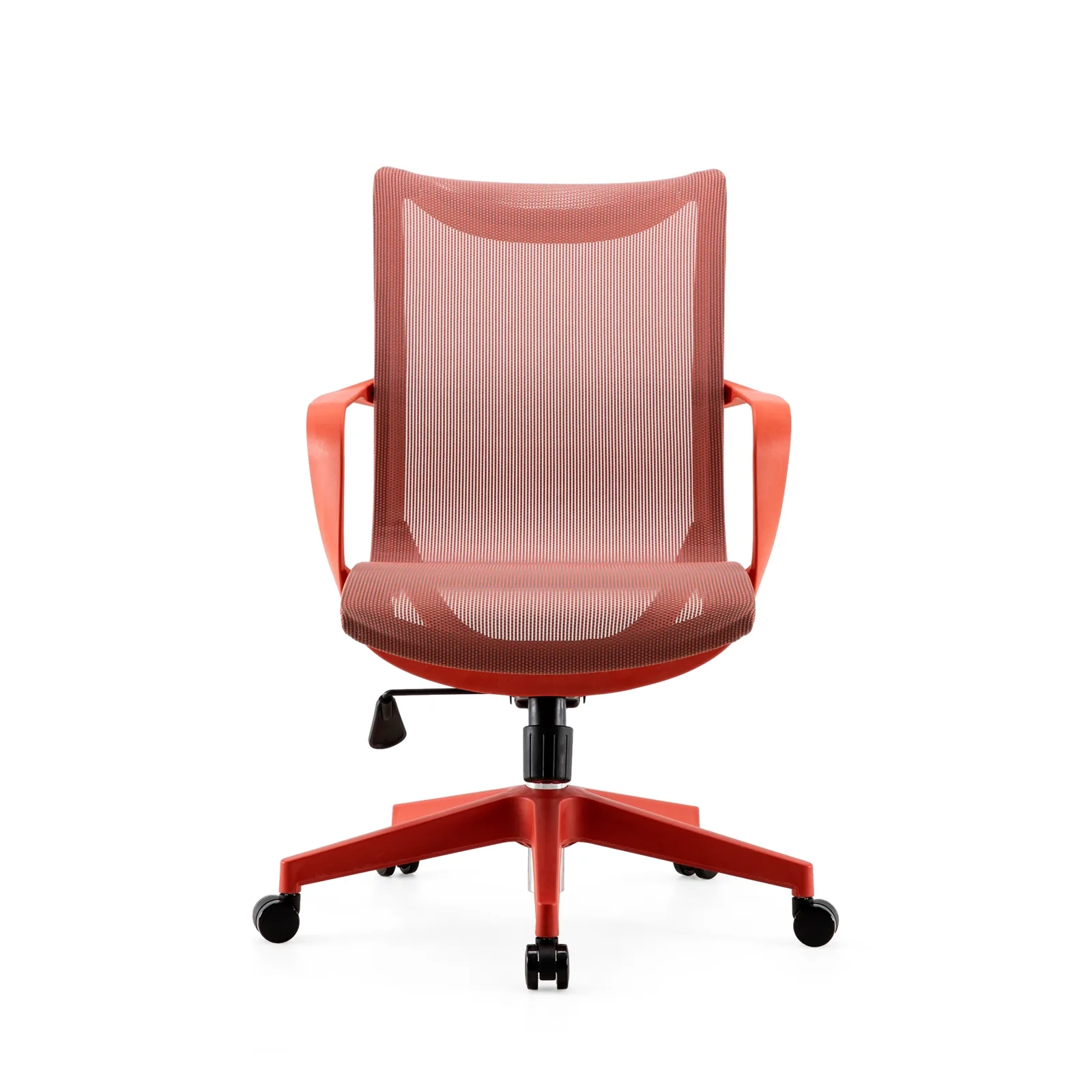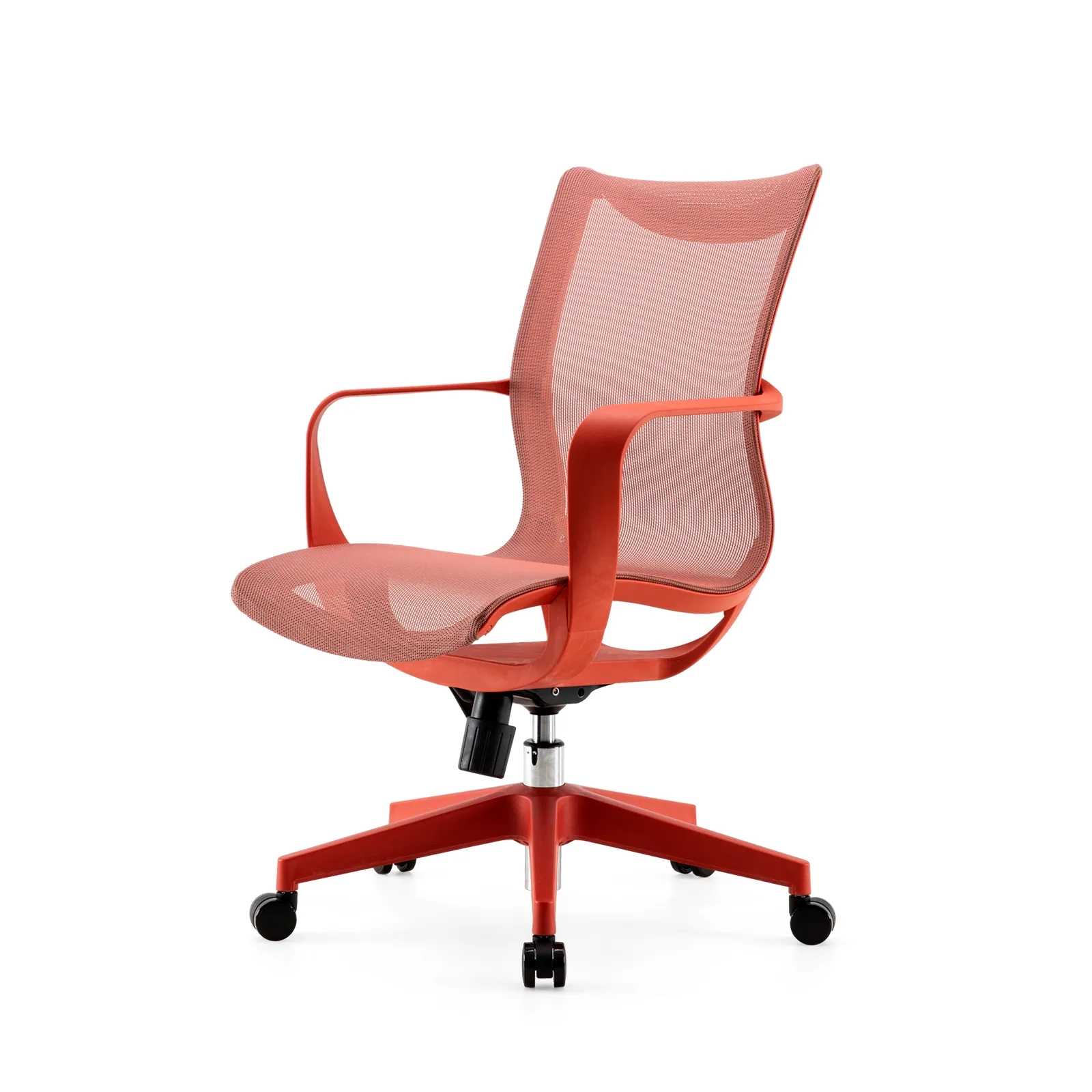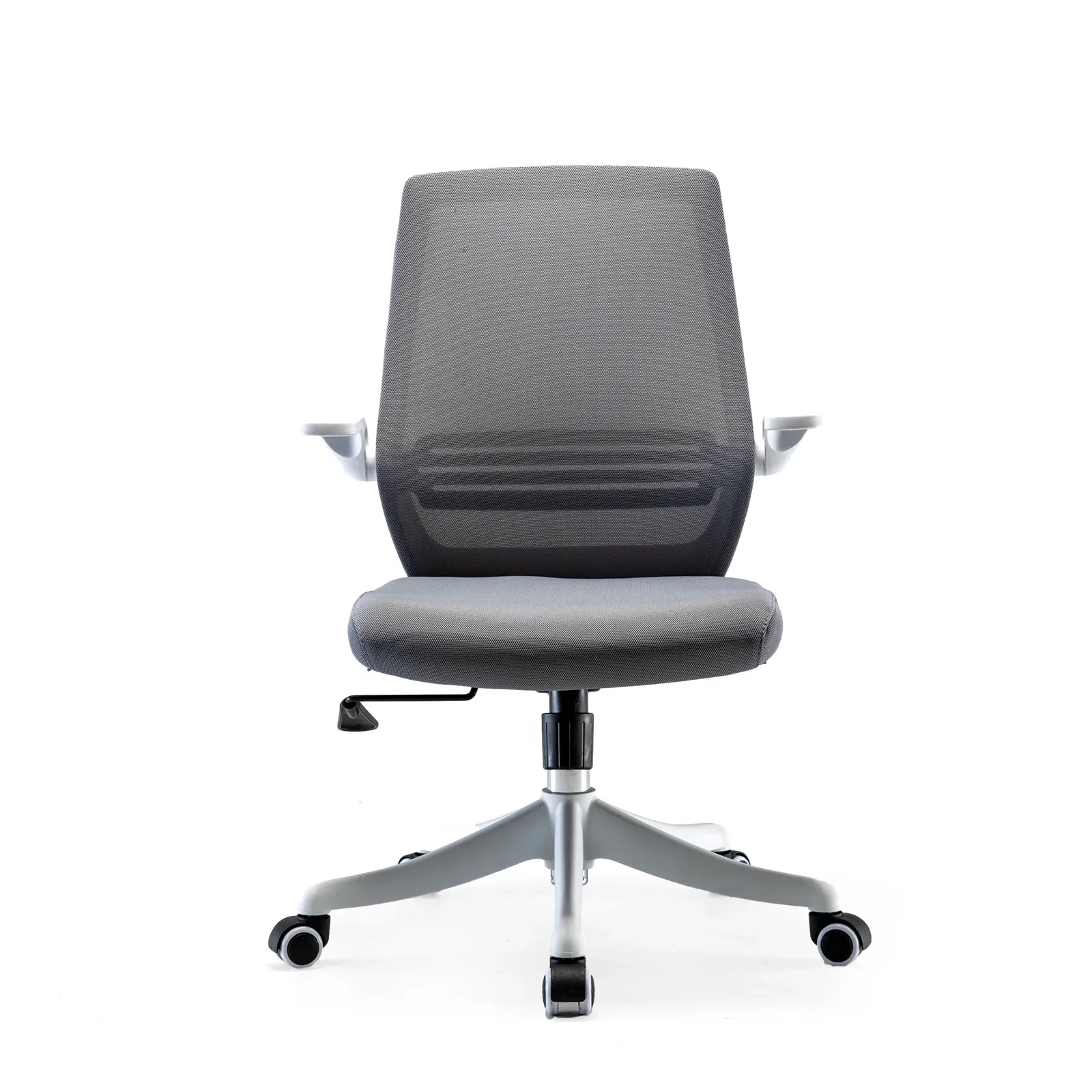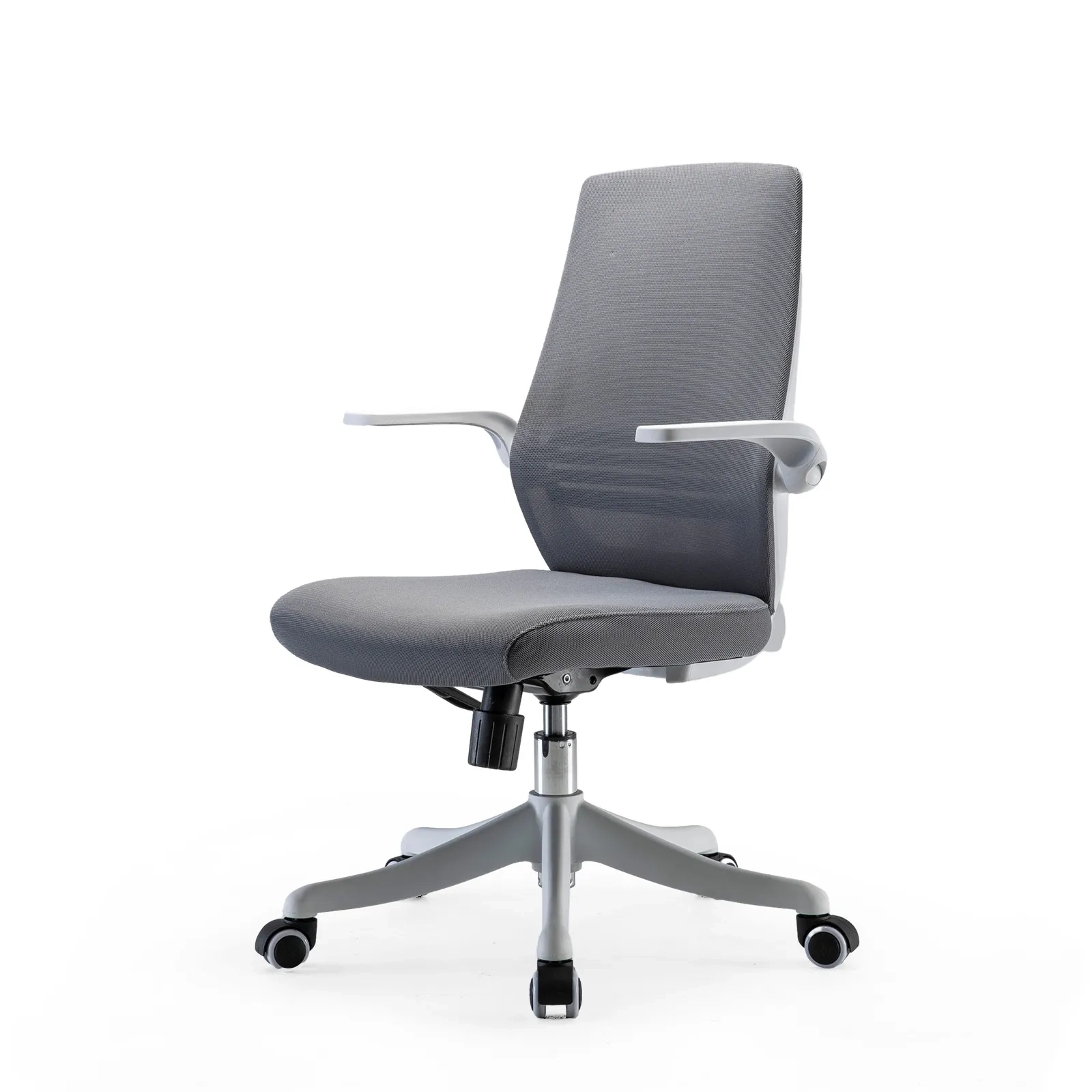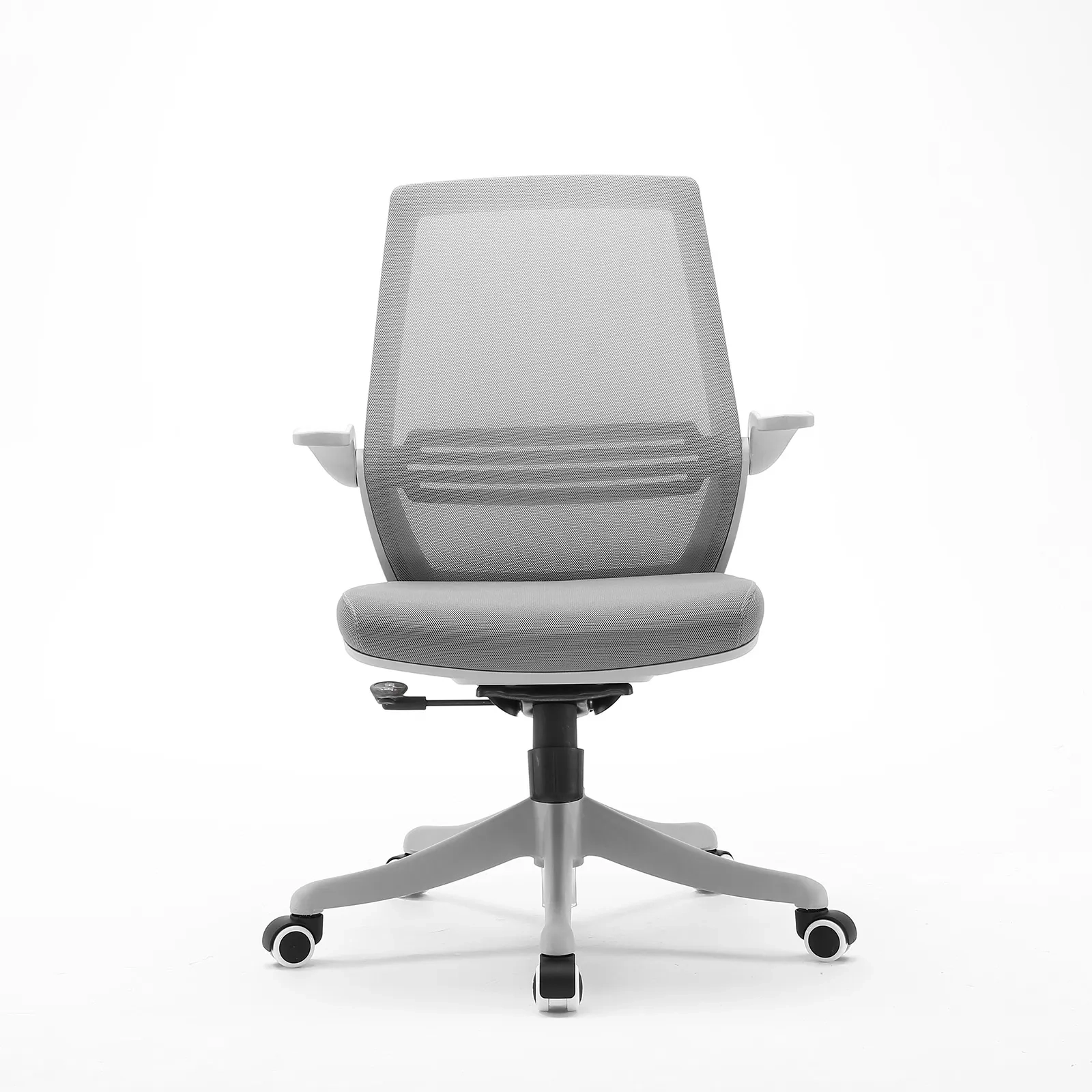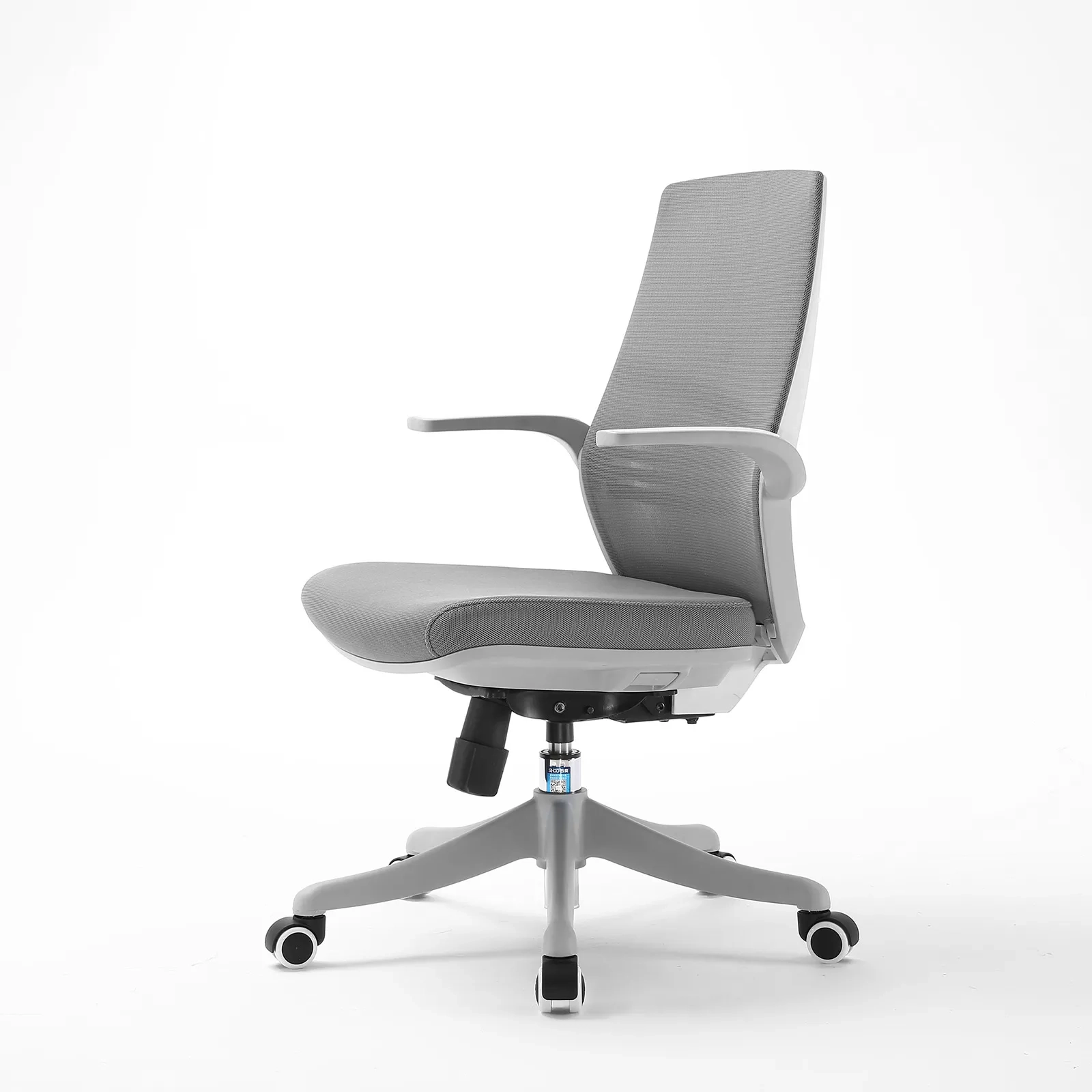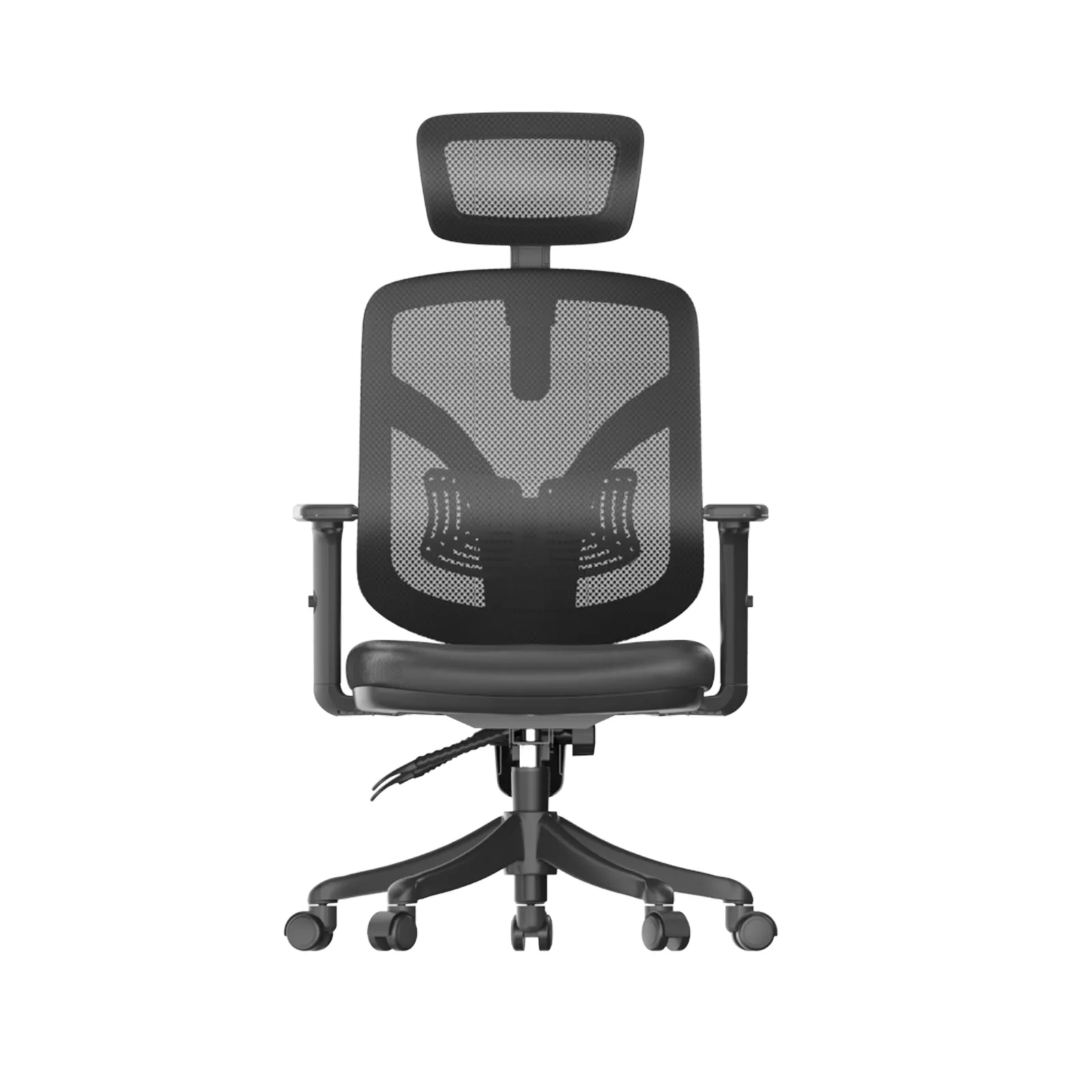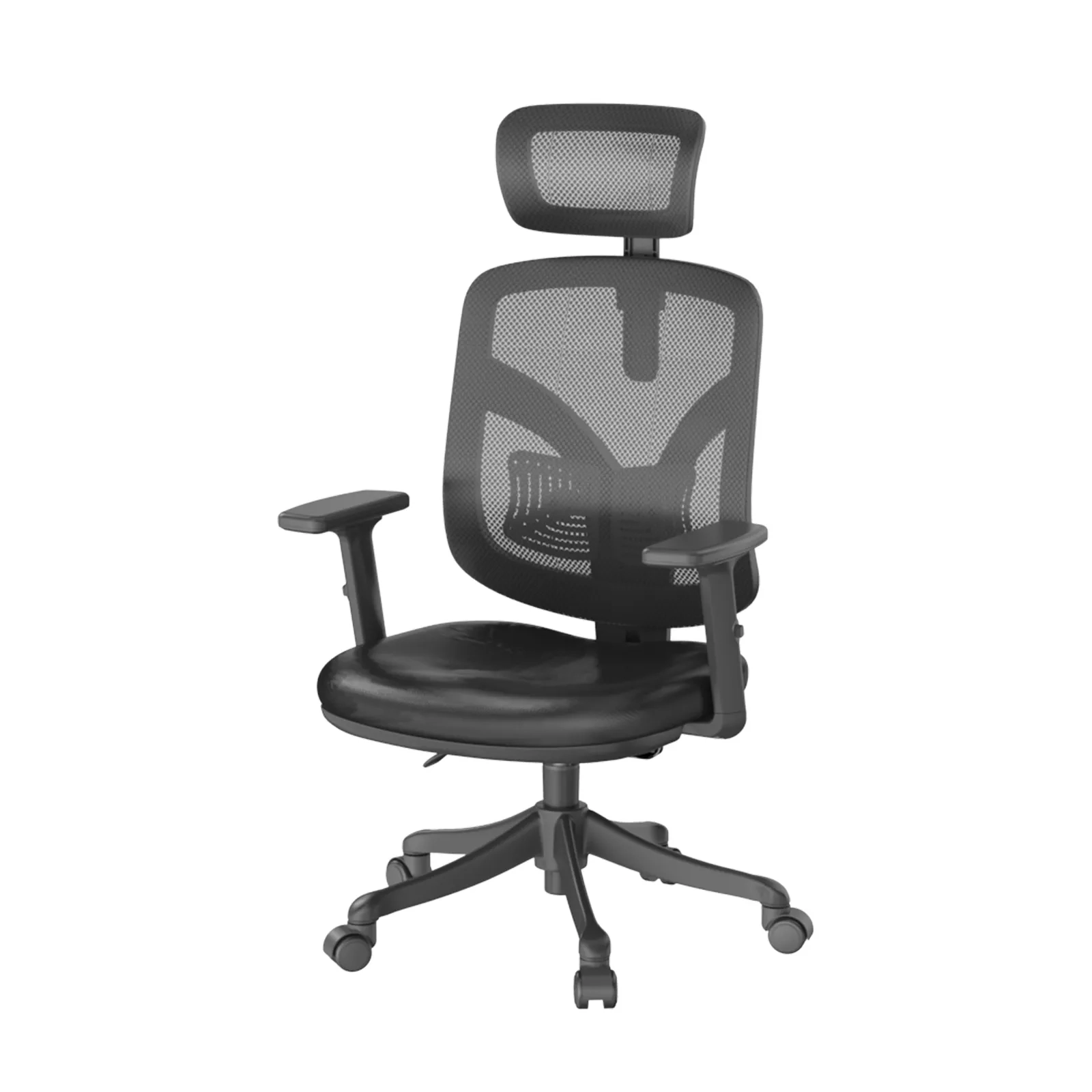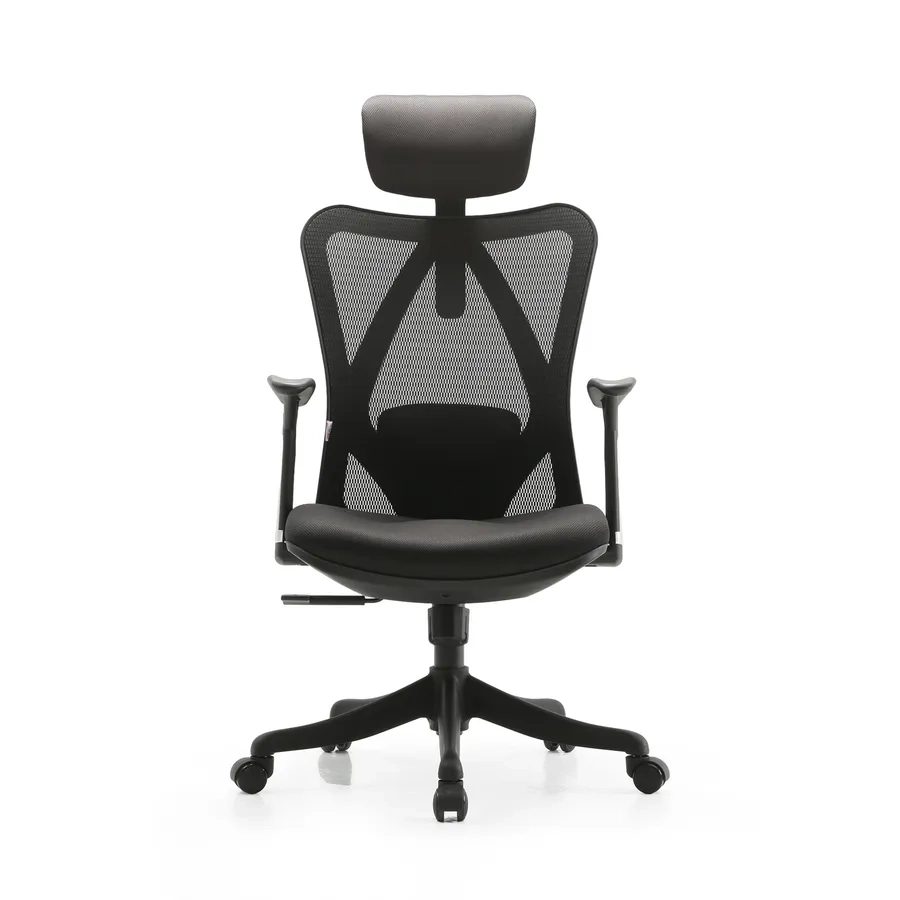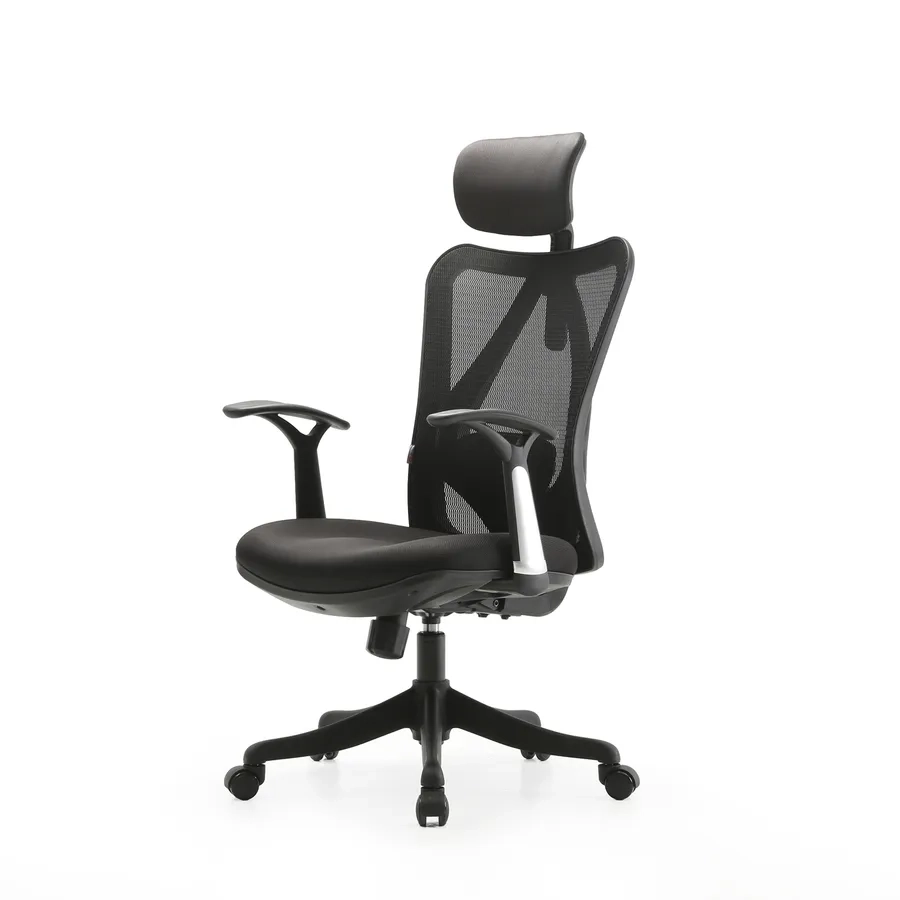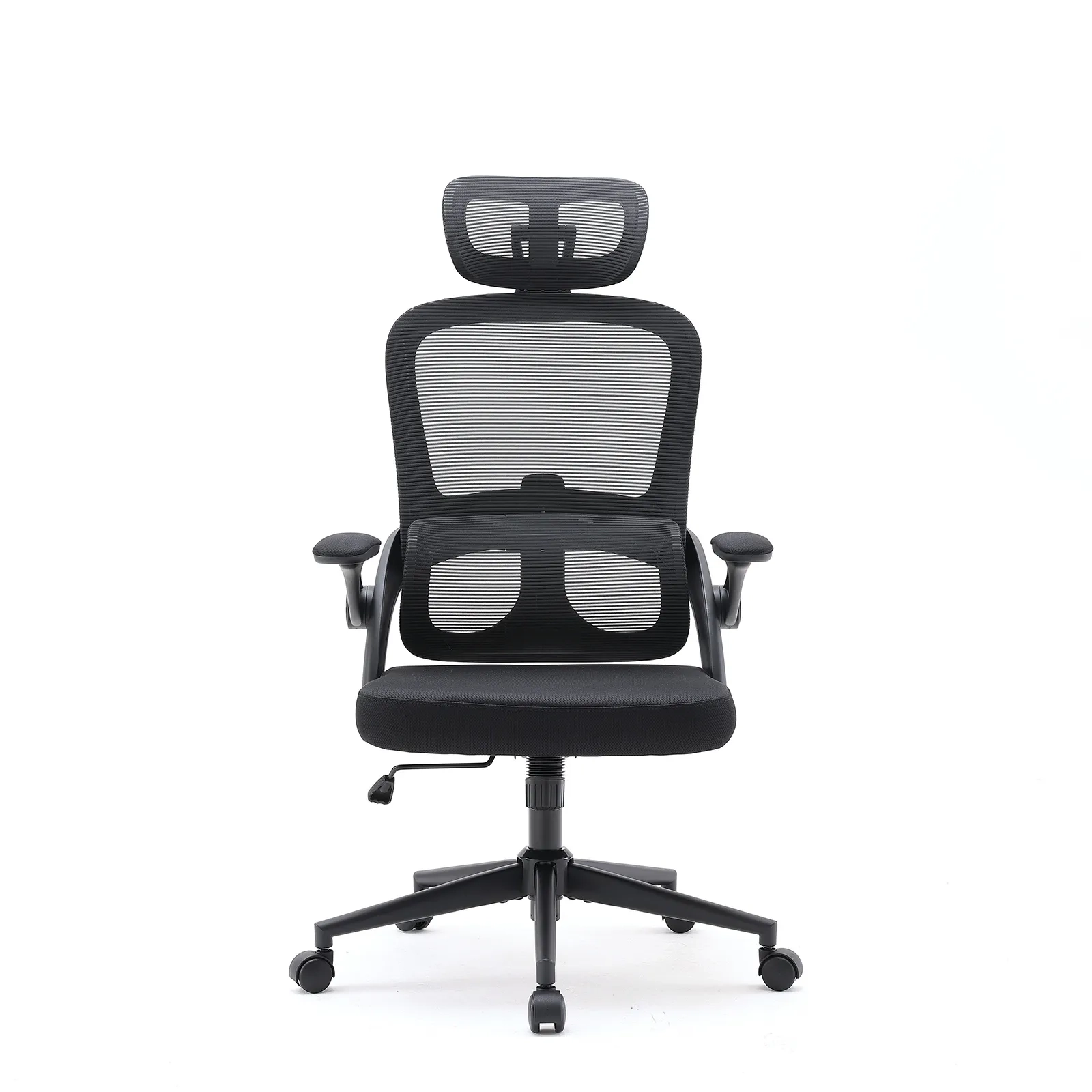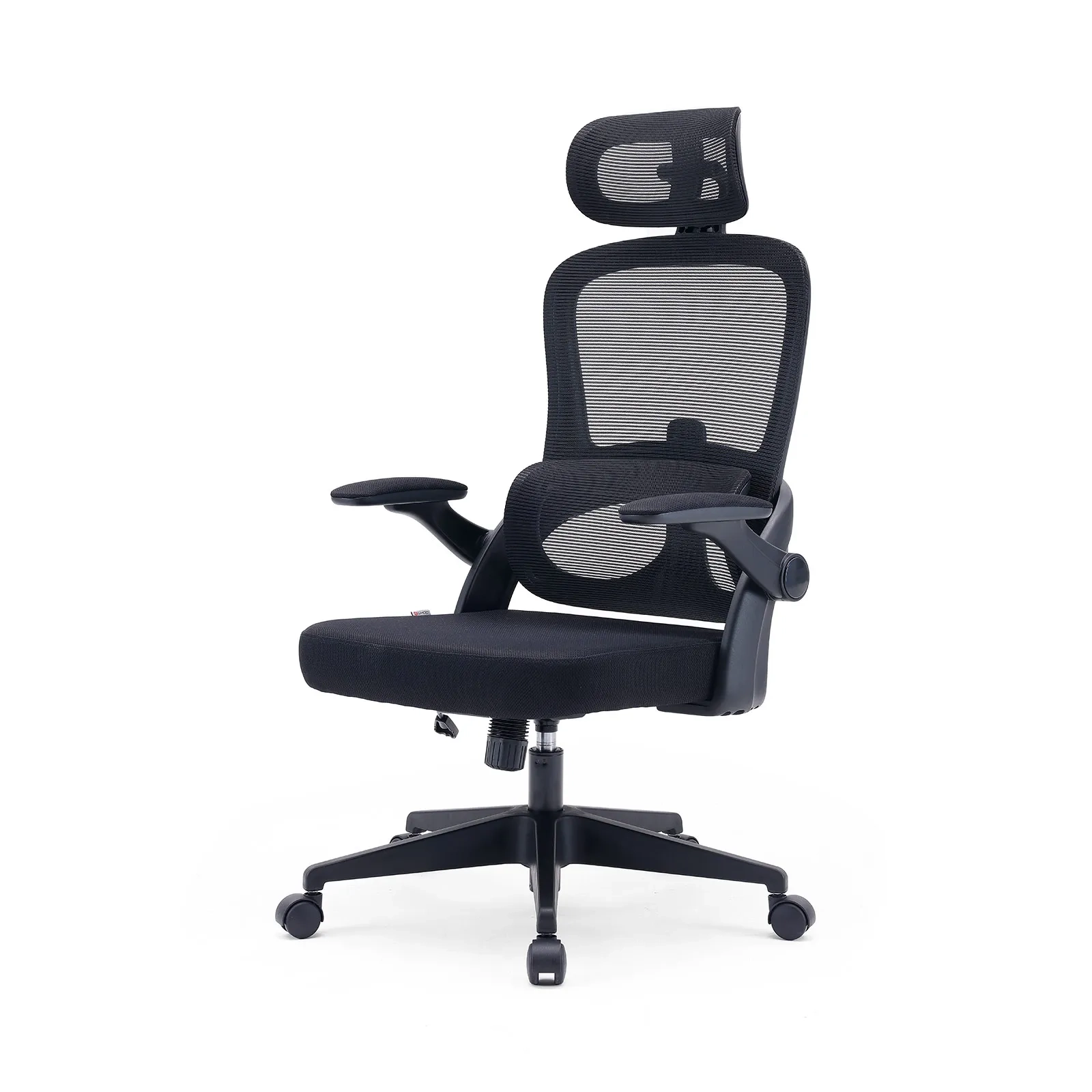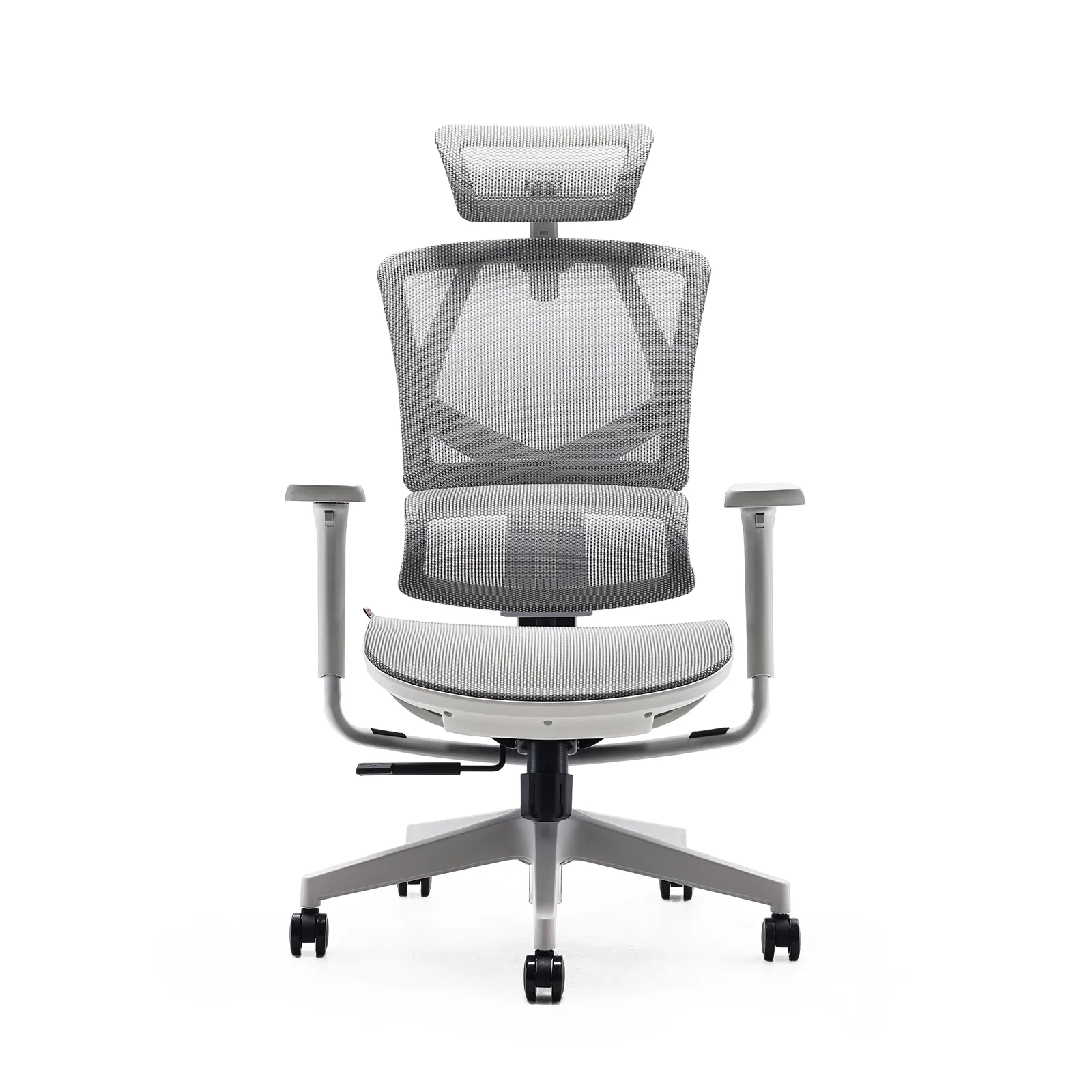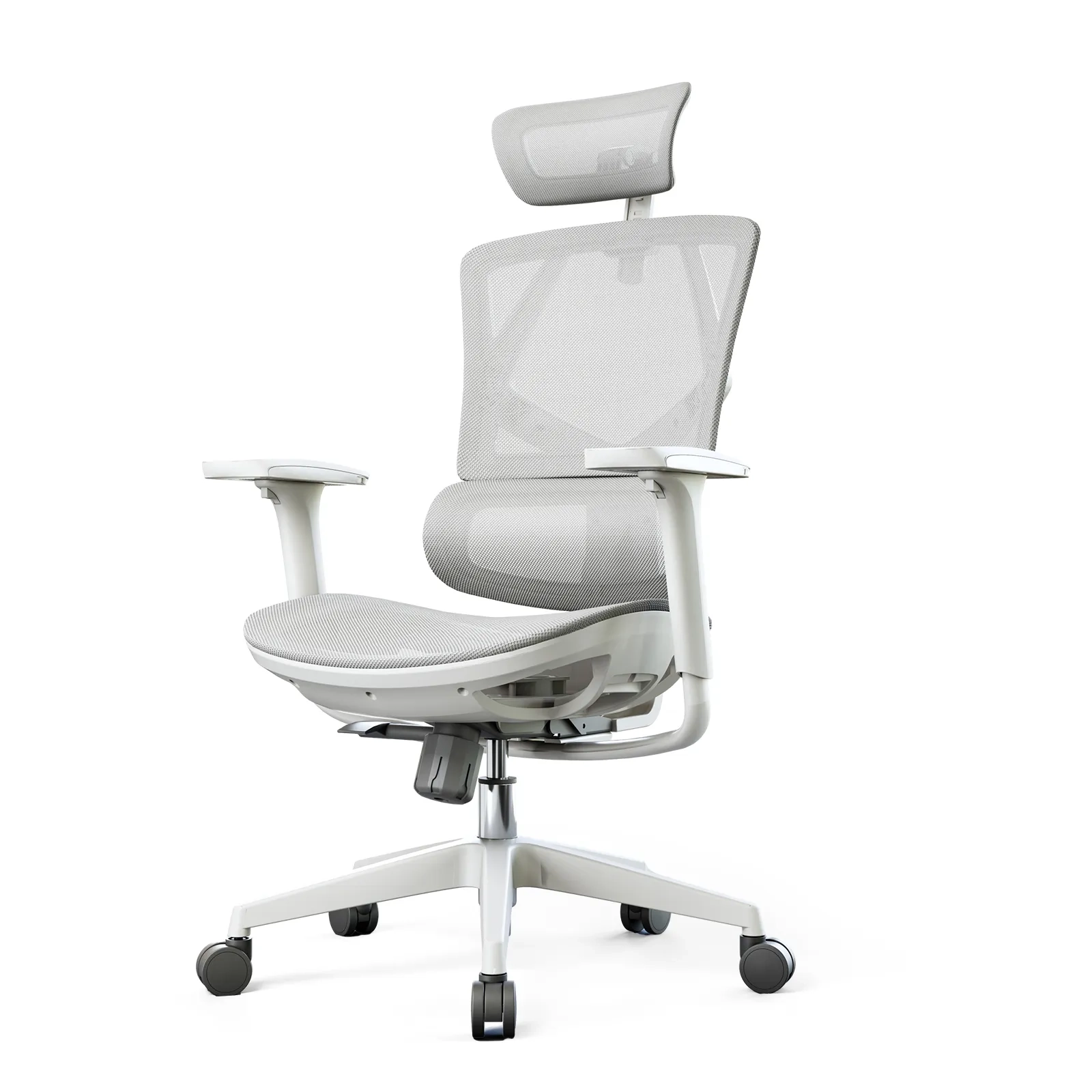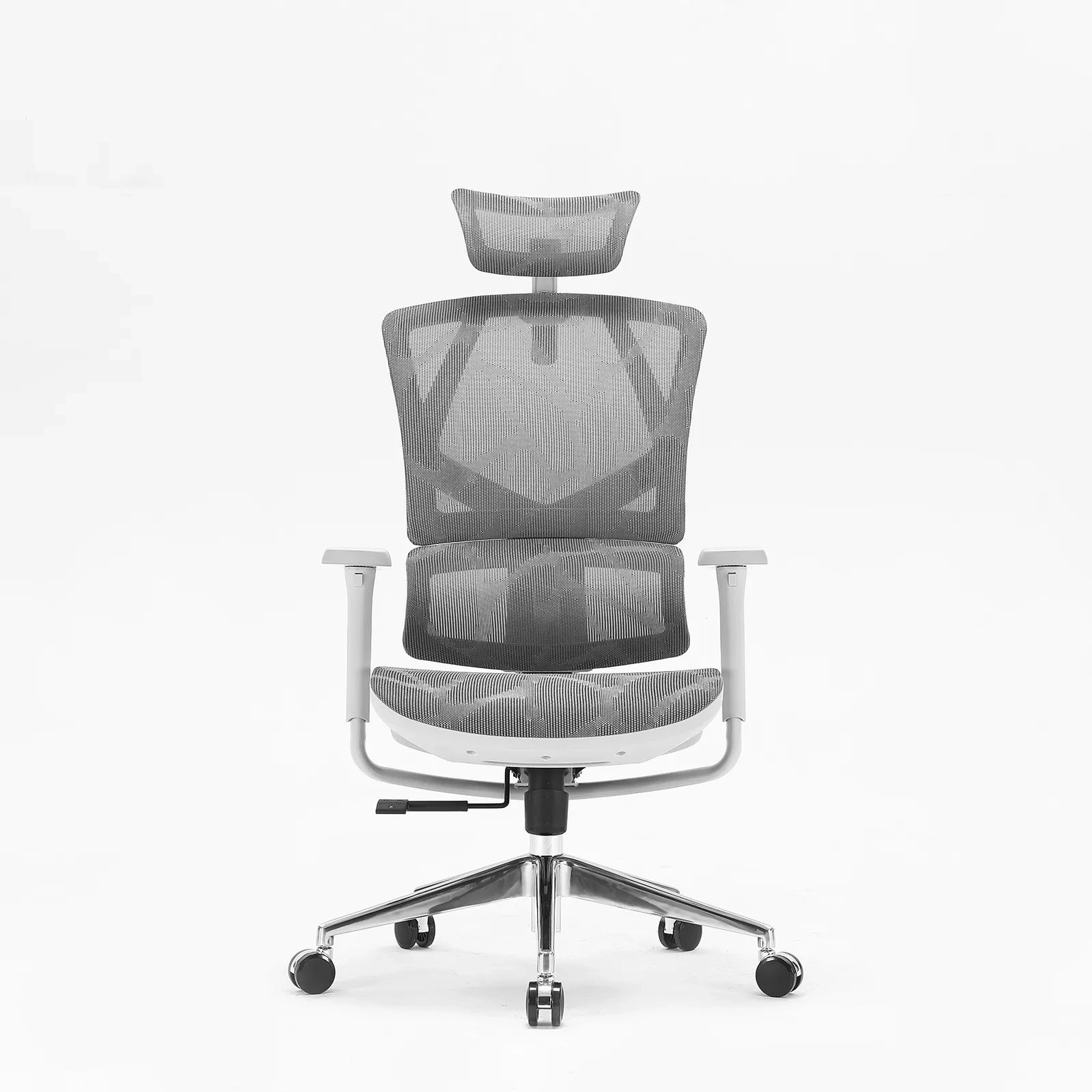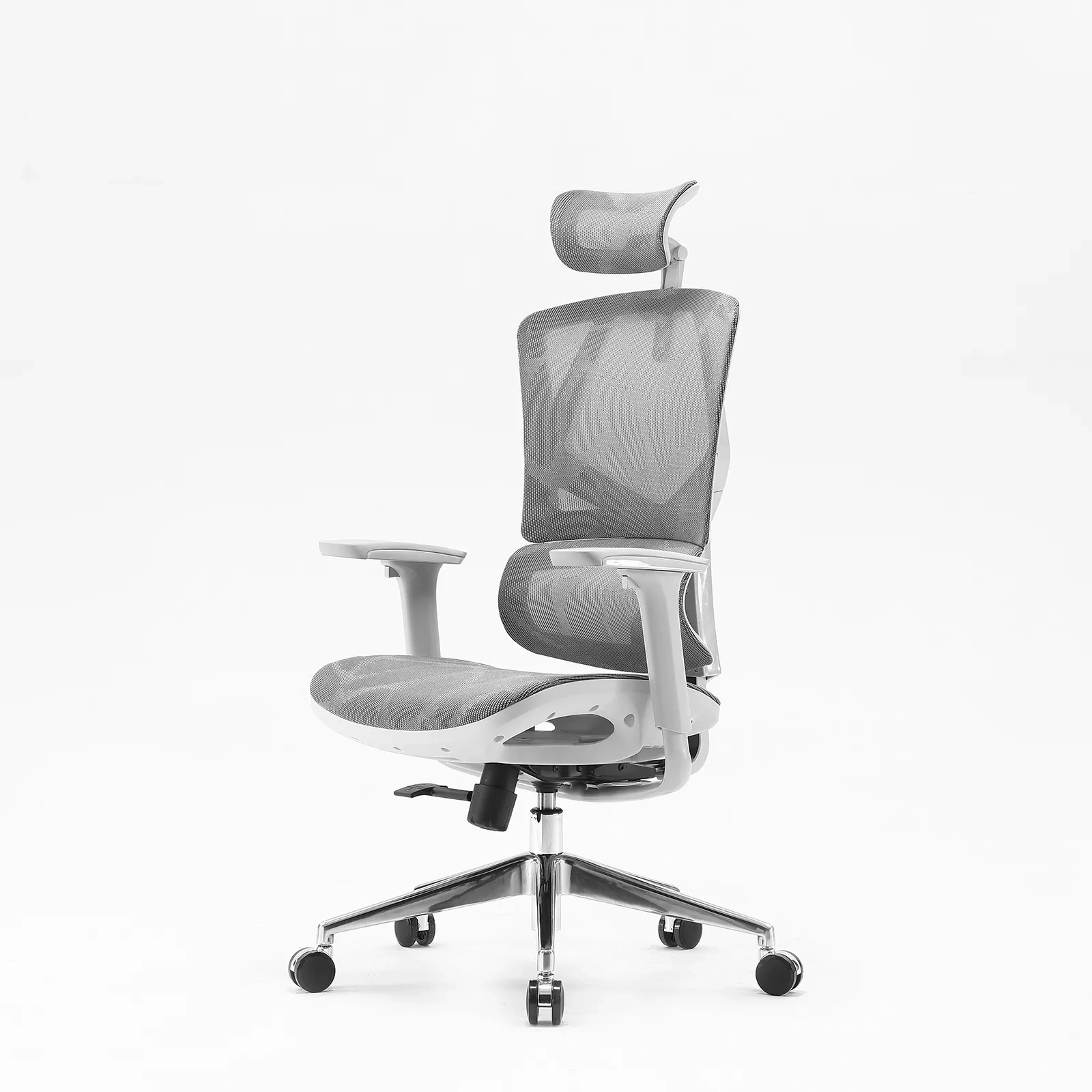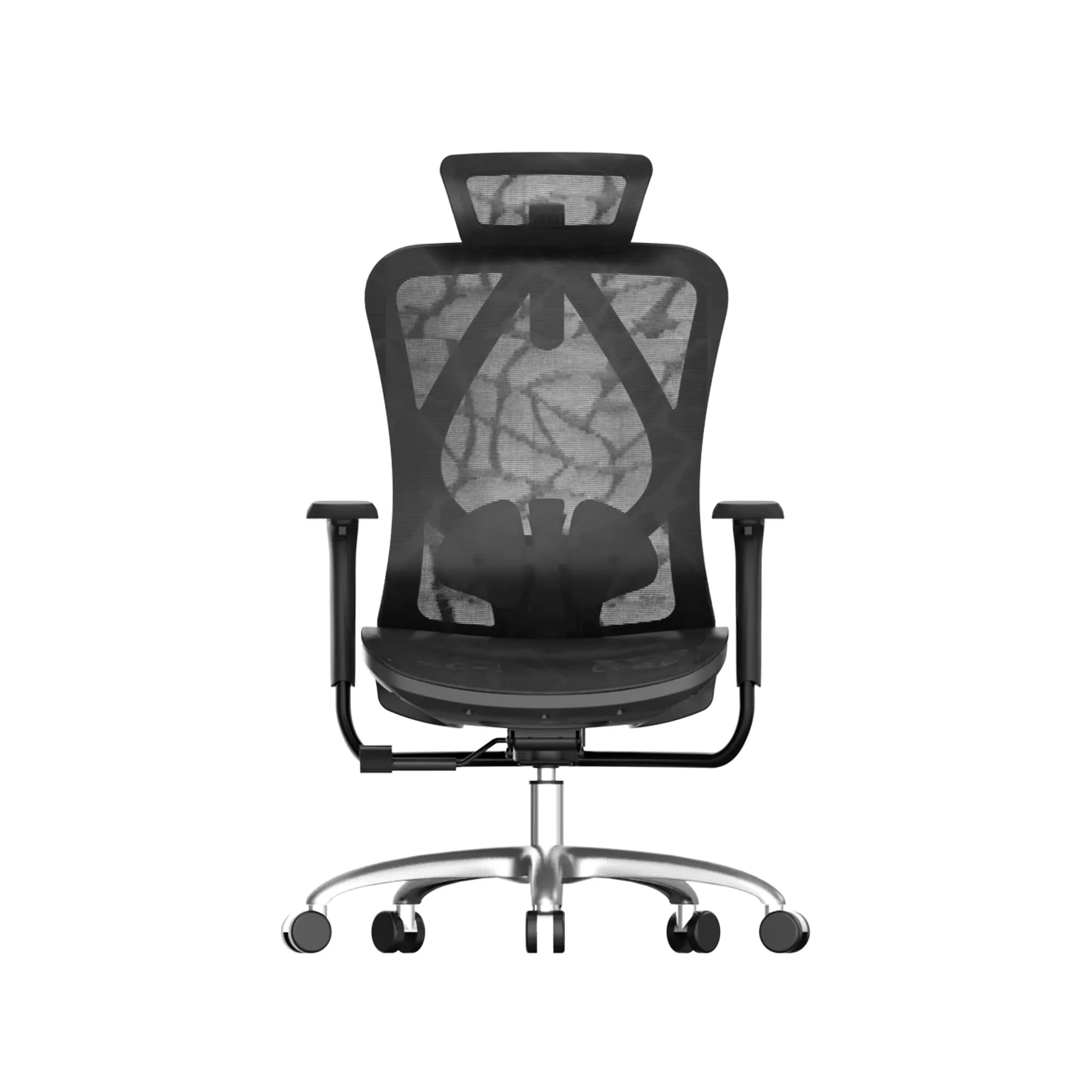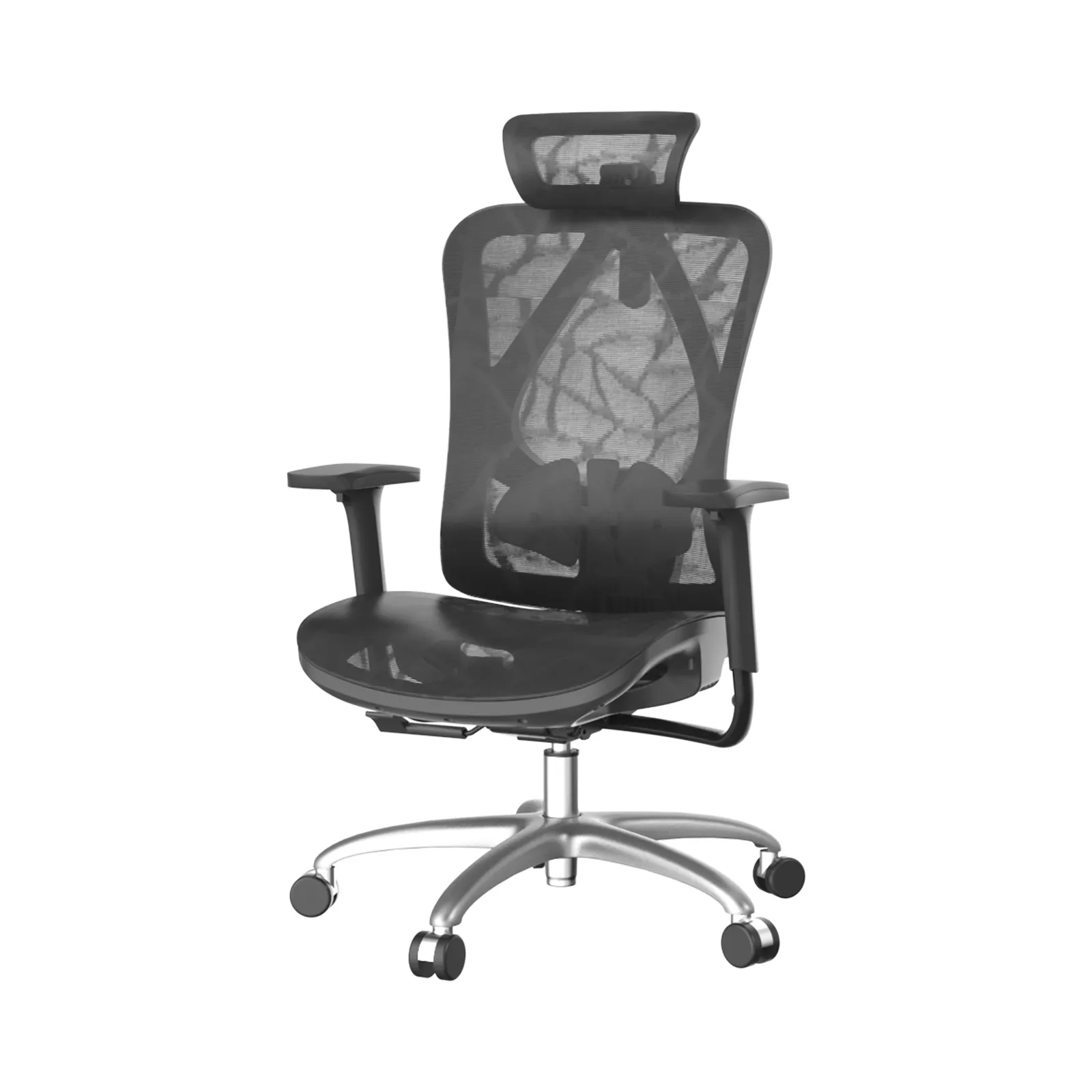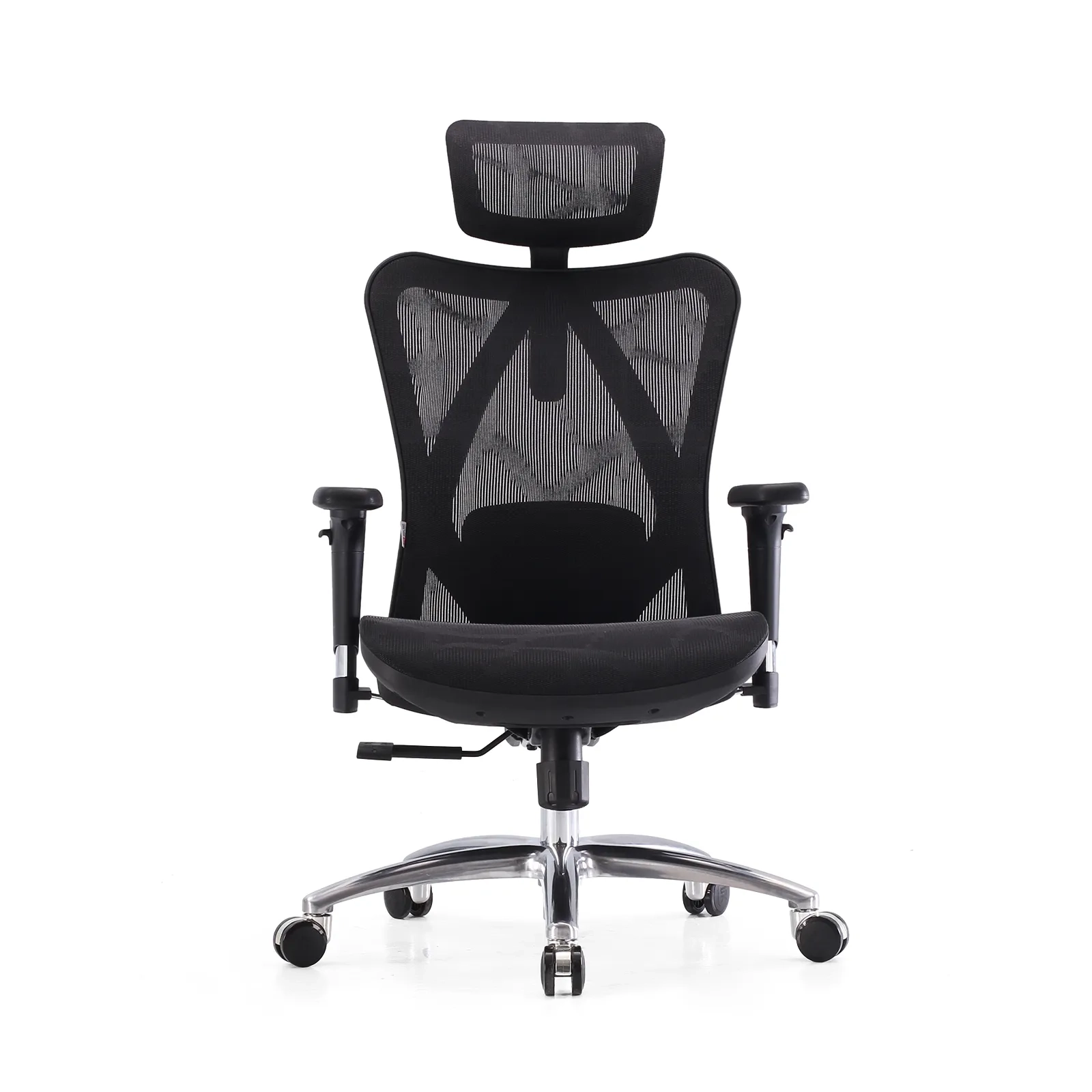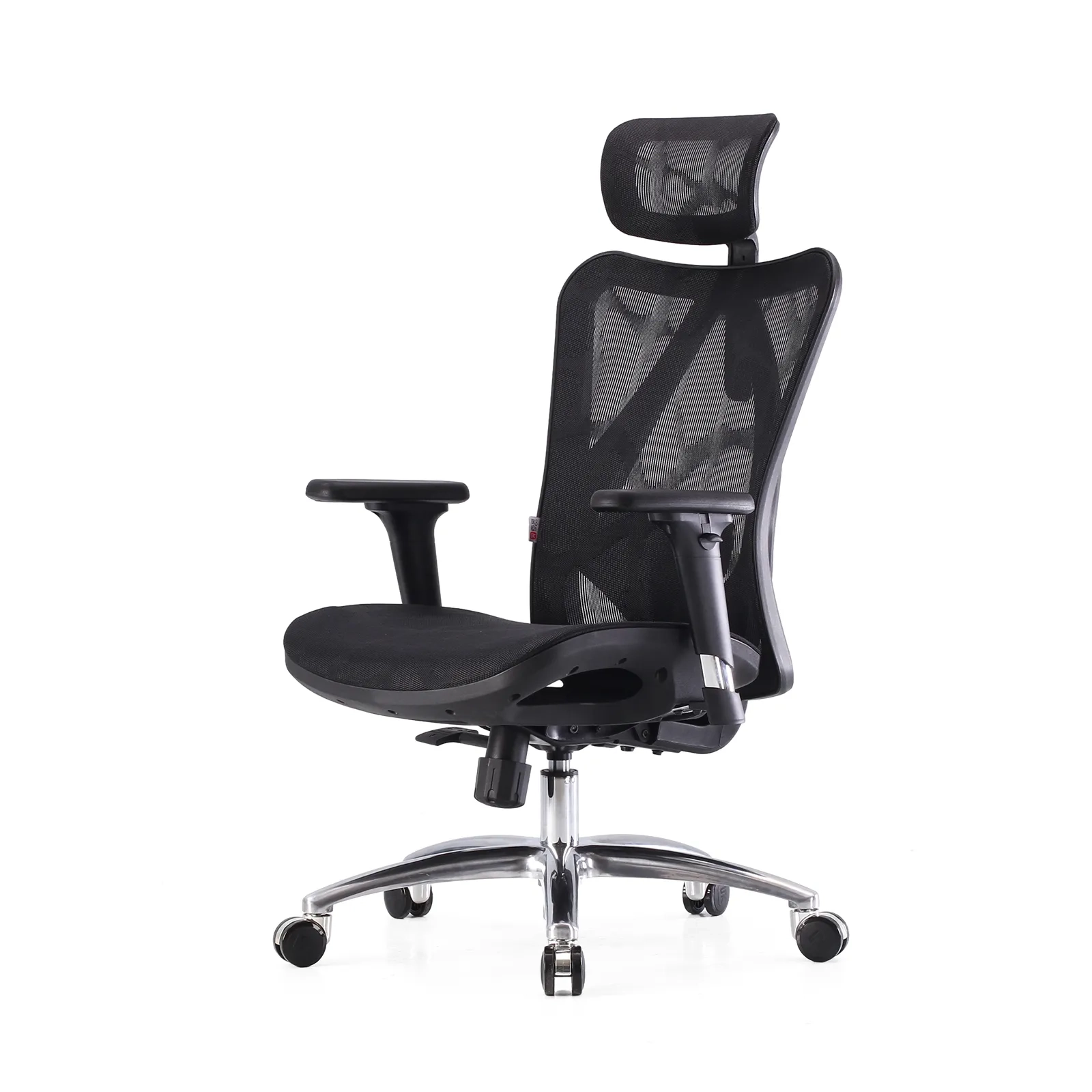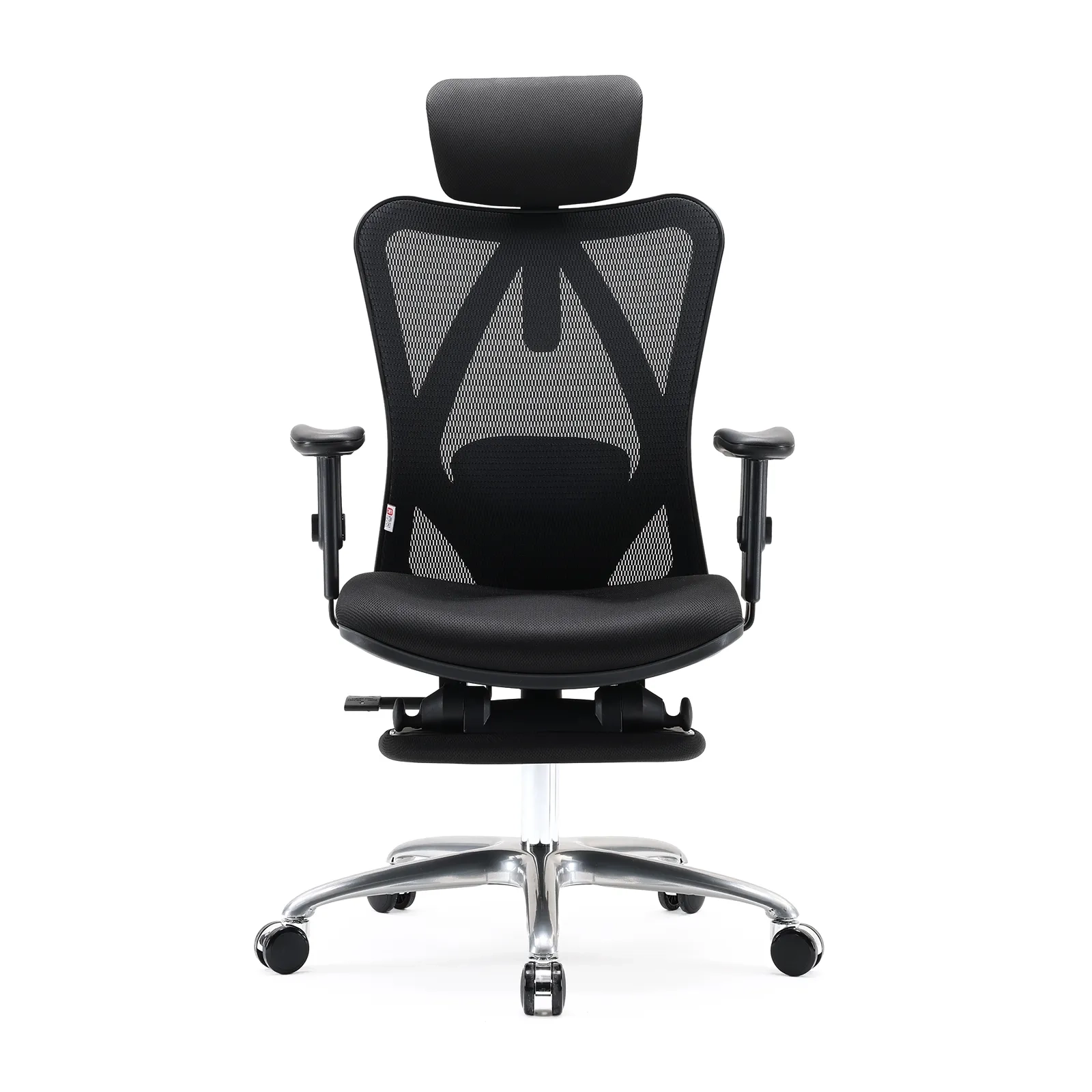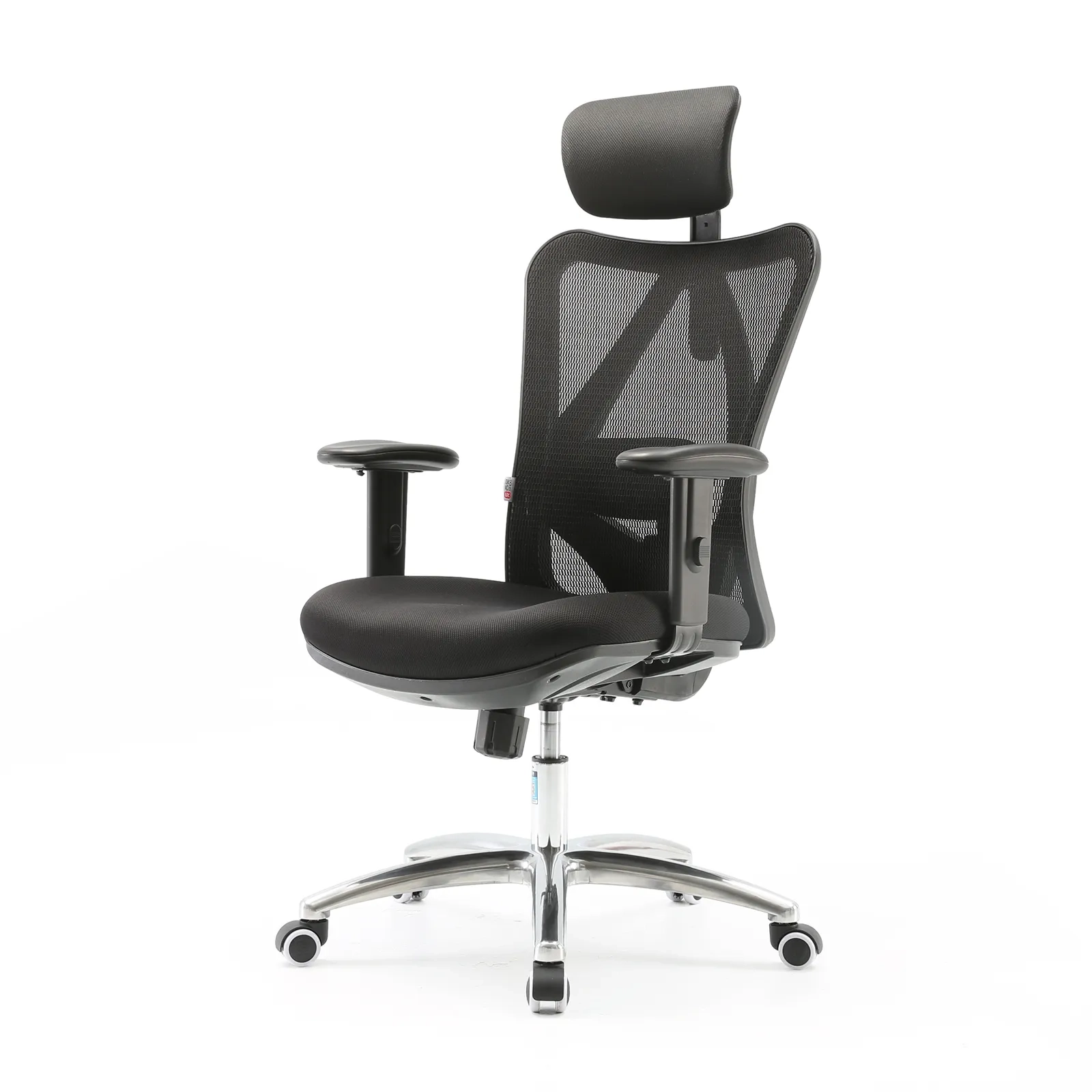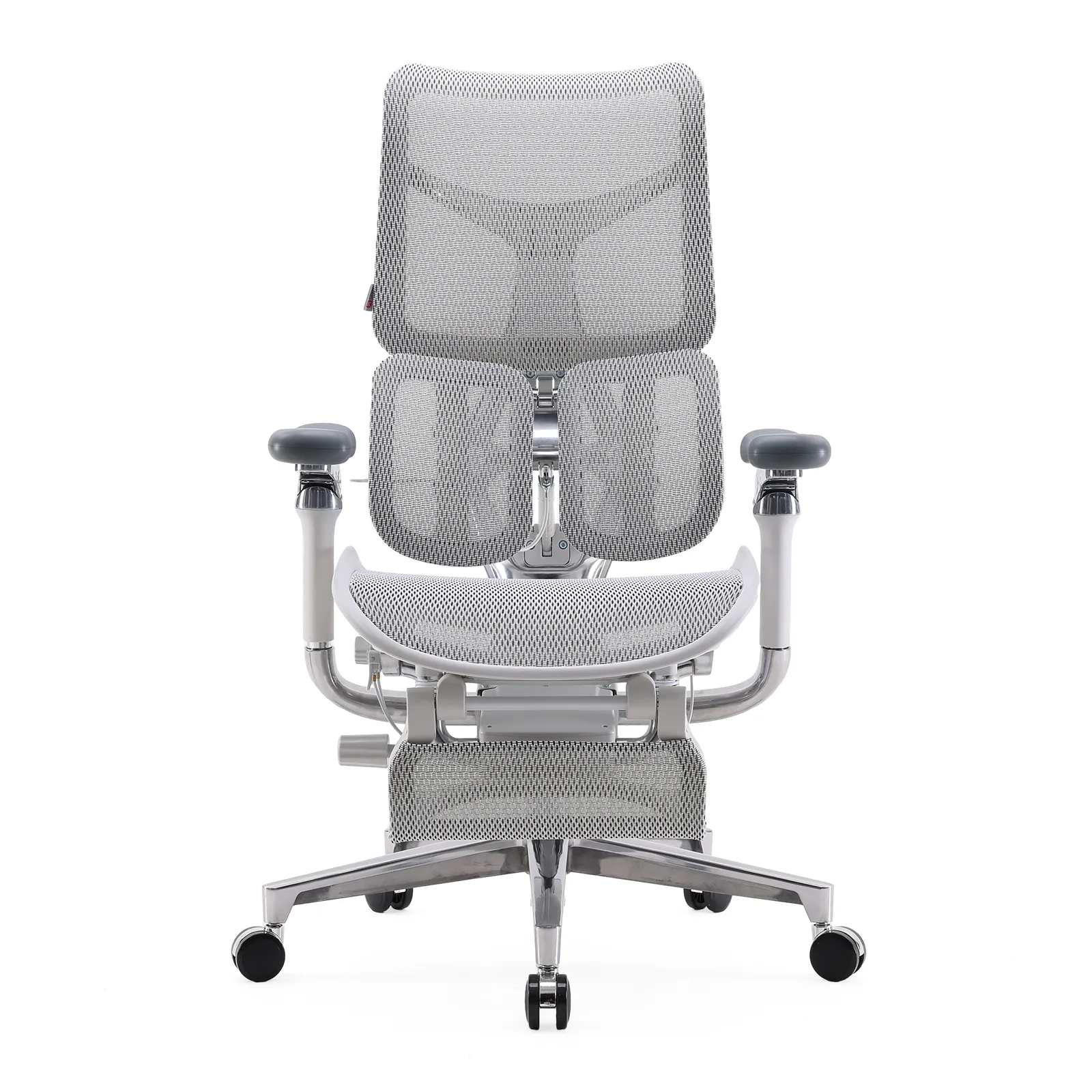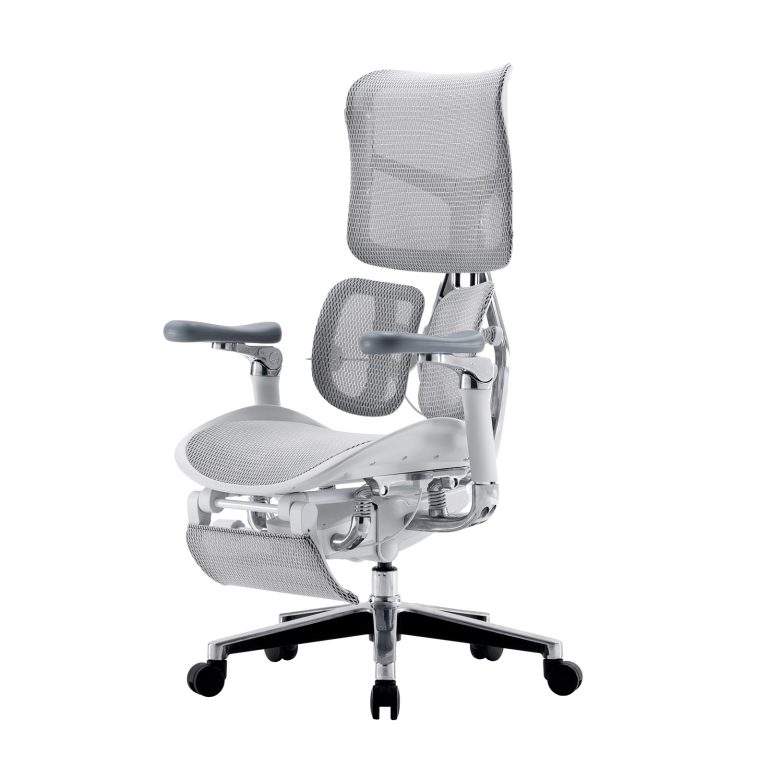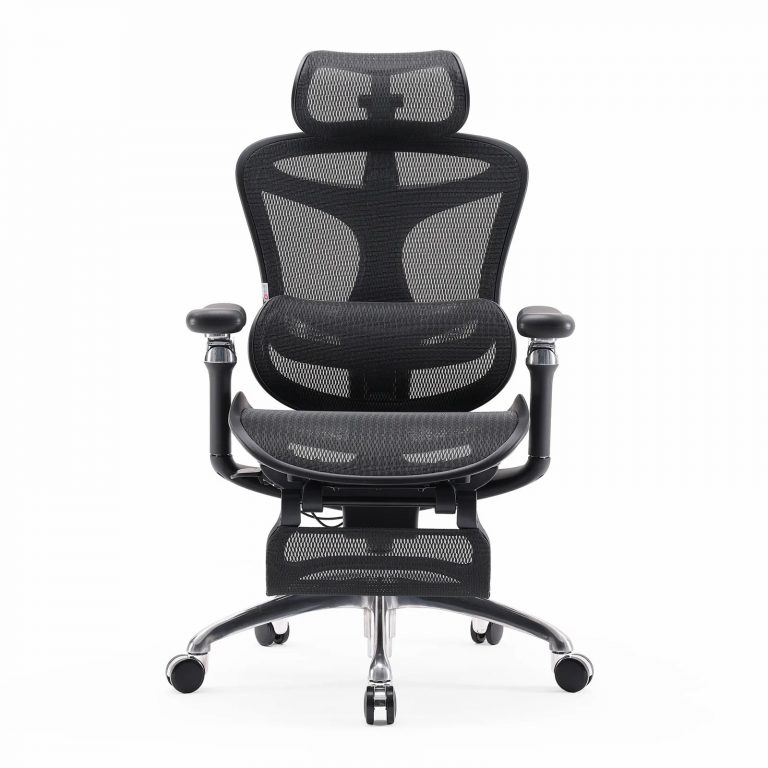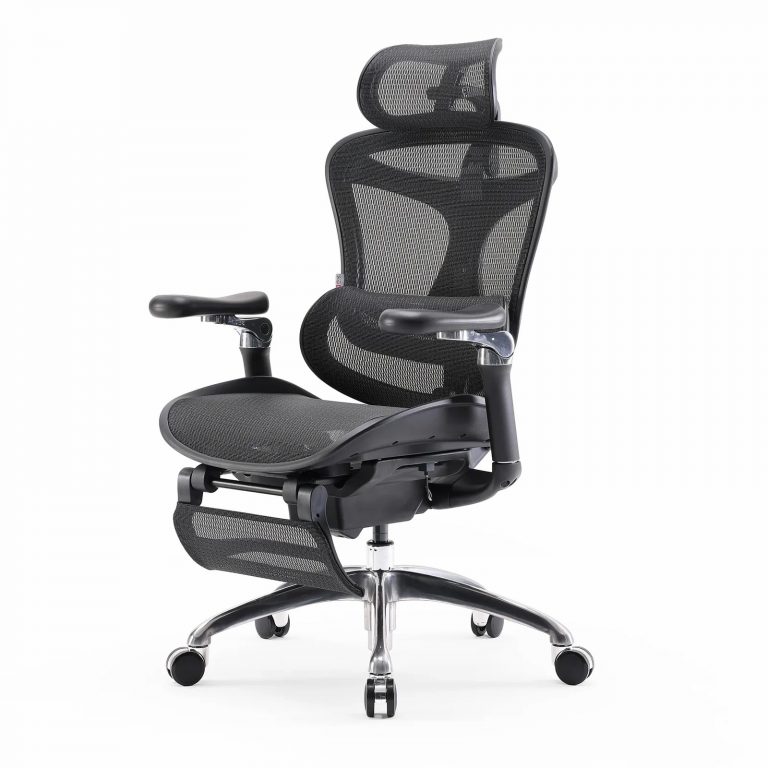









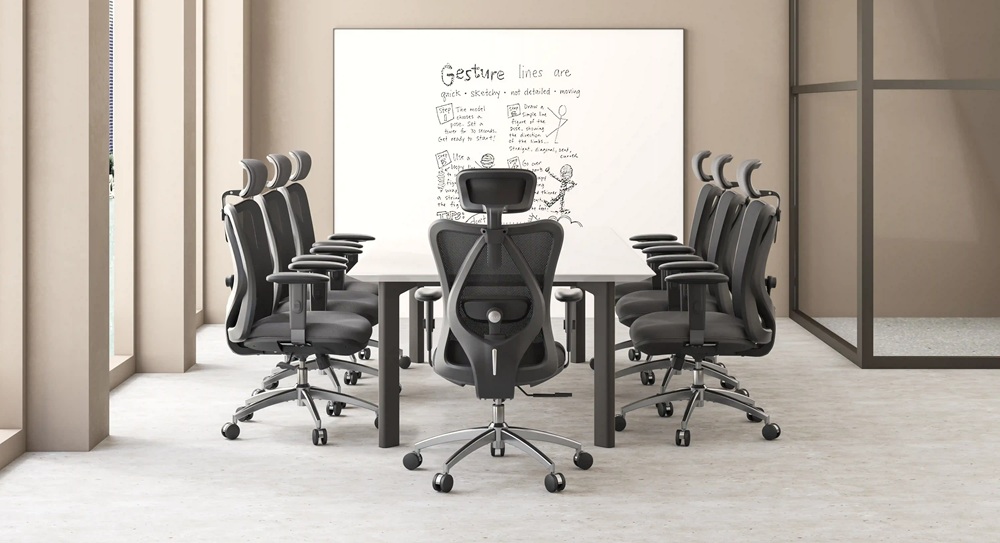
An executive desk chair is a high-back office seat built for long, visible hours in a leadership workspace, such as a private office, a boardroom, or a client-facing desk. It pairs a taller back and stronger lumbar support with materials that read as formal, so the chair supports posture and signals how a company treats the people who sit in it. For distributors, it is a distinct category from a compact task chair, with its own buyer expectations around presence, durability, and bulk consistency.
How an executive desk chair works
The chair supports the spine through three load-bearing parts that a basic task chair often simplifies:
- High back. The upper spine and shoulders need support during long sits. A high back keeps the shoulders from rounding forward when the user leans back between calls.
- Lumbar curve. The lower back needs a curve that meets the small of the back. Adjustable lumbar fits more body types across a mixed leadership team than a fixed pad.
- Recline and tilt. A recline range shifts load off the spine during breaks. A chair locked in one forward posture lets the lower back carry the day’s weight alone.
Ergonomics guidance from OSHA frames the core problem well: sustained static postures are what tire the body, so any executive chair should let the user change position through the day.
Executive chair vs task chair
A task chair is built for dense seating plans: compact, adjustable, and neutral. An executive office chair is built for a single demanding user and a room where the chair is seen. The differences show up in three places:
| Factor | Task chair | Executive desk chair |
|---|---|---|
| Back height | Mid or low | High |
| วัสดุ | Mesh or basic fabric | Mesh, leather-look, padded |
| Use case | Open plan, fleets | Private office, boardroom |
Neither is “better” in the abstract. The executive chair wins where presence and long solo sits matter; the task chair wins where you seat fifty people identically.
Who should choose one
An executive desk chair fits private offices, boardrooms, and client-facing desks where the user sits for most of the day. It also suits meeting rooms where visitors judge comfort within minutes. It is a weaker fit for open-plan fleets that need one low-cost, identical seat repeated across a floor. For that case, a high-back vs mid-back comparison helps you pick the right back height without over-specifying.
Where the category goes wrong
The executive desk chair is easy to buy badly. The first mistake is choosing by photo: a chair that looks supportive in a catalog can have a flat back that does nothing for the spine, and you only learn that after a user complains a month in. The second is ignoring adjustability and treating every executive as the same body, when a fixed-lumbar chair fits some users and not others. The third is over-specifying a leather-look chair for a warm, poorly cooled office, where mesh would keep the user comfortable through the day. Lead with room, climate, and body, and the model selects itself.
Materials and formality
Materials carry as much weight as the mechanism in a leadership workspace. Leather-look reads formal and recovers from surface marks, which suits client-facing offices. Full mesh stays cool and resists sagging, which suits warm rooms and long solo sits. Padded fabric sits between the two. The right call is the one matched to how the room is used and seen, not the one that photographs best.
SIHOO models by use
SIHOO separates its range by the user and the room rather than by a quality tier, so each model maps to a clear job:
- เดอะ C300 targets long-hour executive use with a high mesh back and dynamic lumbar.
- เดอะ วีหนึ่ง covers tall users and meeting-room layouts with a high-back frame.
- เดอะ M57 serves high-volume SMB orders where one executive-grade chair must scale across a building.
For the comfort-deep-dive side, see our published what makes an executive office chair comfortable for daily use article.
How to choose for procurement
- Fix the room first. Private office and long hours: high-back with dynamic lumbar. Boardroom: padded high-back.
- Match the climate. Warm, poorly cooled markets: full mesh. Climate-controlled offices: leather-look or padded.
- Confirm adjustability. Seat height, back tilt, and lumbar at minimum. Arms adjustable for desk-heavy roles.
- Check the base. A five-star base spreads load better than a four-star base under a leaning user.
- Sample before scaling. One unit per model, sat for a full day, before a container commit.
FAQ
Is an executive chair just a taller task chair? No. It pairs a high back and stronger lumbar with formal materials and a build meant for one demanding user, not dense fleet seating.
Does an executive chair need leather? No. Full mesh is cooler in warm rooms and resists sagging. Leather-look reads more formal but traps heat. Match the material to the room.
Can tall users use a standard executive chair? Only rated models fit well. The V1 is built for tall users and meeting rooms; confirm the back height and weight rating per SKU.
Why does back height matter so much? The upper spine and shoulders slump first during long sits. A high back keeps them supported when the user leans back between meetings.
Should an executive chair match the desk it sits at? Yes. A high-back chair reads out of place at a compact guest desk, just as a mid-back task chair reads thin in a private office. Match the back height to the room’s formality.
What is the difference between an executive desk chair and a task chair? A task chair is built for dense, adjustable fleet seating at a desk; an executive desk chair adds a high-back frame, softer materials, and a composed look for private offices and leadership spaces.
Final thoughts
An executive desk chair is defined less by price than by job: a high-back, well-supported seat for long, visible hours in a leadership workspace. Pick by room, climate, and body, then see the best executive office chairs for 2026 for side-by-side picks, or explore the luxury corner-office option when presence is the priority.